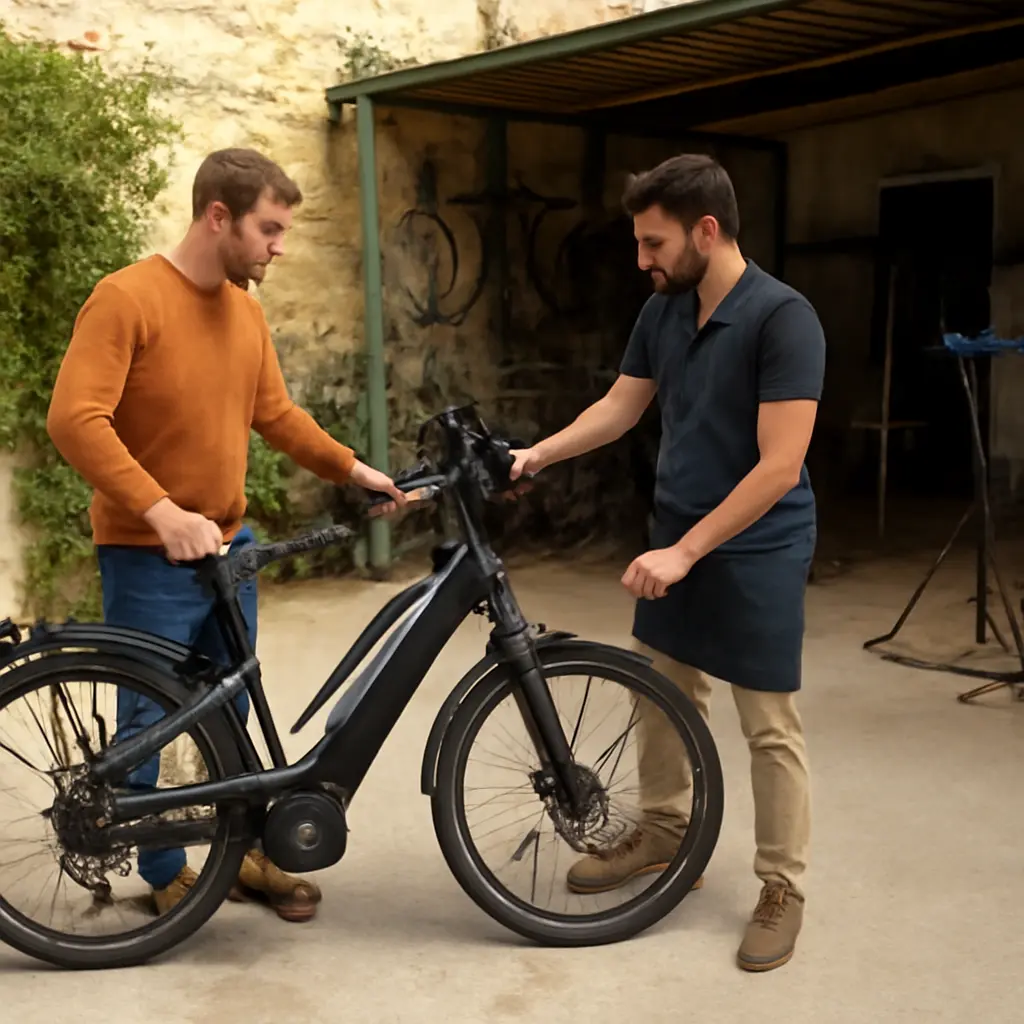
A used e-bike can make everyday trips easier and less expensive, but a bargain can turn costly if its battery is worn out, its parts are hard to replace, or its condition is misrepresented. For beginners, the safest approach is to verify the bike’s identity and service history, test the battery and ride, check brakes and tires, and compare the total cost with a new model. The U.S. Consumer Product Safety Commission (CPSC) warns that lithium-ion battery incidents can cause fires and injuries, while PeopleForBikes reports that e-bike sales surged during the pandemic-era cycling boom. Those facts make a careful inspection especially important: the sections below explain battery health, compatibility, mechanical checks, safe test rides, and how to judge the real price.
Used e-bike battery condition determines the real value
A used e-bike’s battery condition is the battery’s remaining ability to store and deliver energy safely and predictably. There is no single universal used-bike test that converts a battery’s age into an exact remaining-life figure; results depend on the cells, charging history, temperature exposure, storage, and how the bike was ridden. Bosch eBike Systems describes battery aging as a gradual loss of capacity over time, so a battery that still powers on may provide substantially less range than it did when new.
That distinction matters because replacement batteries can cost hundreds of dollars, and some discontinued or proprietary systems may be difficult to support. Treat the battery as a major component with its own value—not as a small accessory included in the sale.
Ask for a battery health report, not just a charge indicator
A battery health report is a diagnostic reading from the bike’s manufacturer system or an authorized dealer. Depending on the brand, a report may show battery capacity, charge cycles, fault codes, or service history. Ask the seller to arrange a diagnostic check with a dealer before you pay, and request the result in writing. A display showing “full” only confirms the current charge level; it does not prove that the battery retains its original capacity.
If no diagnostic is available, ask how far the seller can ride on a typical charge, what assist level they use, and whether range has changed noticeably. Range varies with rider weight, hills, temperature, tires, and assist settings, so one claimed mileage figure is not a reliable battery test. A sudden power drop, error code, swelling, damage, or unusual heat is a reason to stop the inspection and seek professional advice.
Verify battery and charger compatibility
Compatibility means the battery, charger, motor, and control system are approved to work together. Check that the battery’s brand and model match the bike’s system and that the charger is the correct manufacturer-approved unit. Do not assume that a plug that fits is electrically suitable. The CPSC advises consumers to use the charger supplied with a micromobility product or a replacement approved by its manufacturer.
Walk away from a battery with a cracked case, crushed housing, exposed wiring, evidence of water intrusion, or an unknown aftermarket charger. CPSC safety guidance emphasizes using certified micromobility products and avoiding damaged or modified battery systems. Ask whether the battery has been repaired, rebuilt, or replaced, and confirm that any replacement is supported by the bike maker.
Used e-bike ownership depends on system and parts support
An e-bike system is the connected set of motor, battery, controller, display, sensors, and wiring that provides electric assistance. Its supportability is the practical ability to diagnose, repair, and obtain compatible parts for that system. Before buying, identify the maker and model of each major component, then ask a local bike shop whether it services that system and can source its parts.
This check is especially important for older, uncommon, or direct-to-consumer models. A mechanically sound bicycle may still become difficult to use if its controller fails and replacements are unavailable. A low purchase price is not a bargain if the only repair option is a costly system replacement.
Confirm the bike’s identity and ownership
A bicycle’s identity is established by its make, model, serial number, and documentation. Record the serial number and compare it with the receipt, registration record, or manufacturer information when available. Ask for proof of purchase and a clear explanation of who owns the bike. If the number has been removed or altered, or the seller refuses to discuss ownership, do not proceed.
Also check whether the bike has been recalled. The CPSC maintains recall notices for consumer products, including bicycles and e-bike components; search by manufacturer and model rather than relying only on the seller’s assurance. A recall may require a repair, replacement, or other remedy before the bike is safe to ride.
Check local e-bike class and equipment rules
E-bike classification describes how a jurisdiction regulates a bike according to features such as its maximum assisted speed and whether assistance is throttle-controlled or pedal-activated. In the widely used U.S. three-class framework, Class 1 assistance stops at 20 mph and operates with pedaling; Class 2 includes a throttle and assistance up to 20 mph; and Class 3 provides pedal assistance up to 28 mph. State and local rules can differ, and some places restrict where particular classes may be ridden.
The bike’s label, manual, and settings should agree with its advertised class. Ask whether the motor has been modified or the speed limiter changed. Check your state and local transportation agency’s current rules for age limits, helmet requirements, paths, and road access before buying, especially if the bike will be used on shared trails.
Used e-bike mechanical condition affects safety and repair costs
Mechanical condition means the frame, wheels, brakes, drivetrain, and controls work as intended under load. Electric assistance can make a bike heavier and faster in everyday use than a conventional bicycle, so worn brakes, loose components, or damaged tires deserve particular attention. A quick visual check is useful, but it does not replace a qualified mechanic’s inspection.
The National Highway Traffic Safety Administration recommends regular bicycle maintenance and checking essential components before riding. For a used e-bike, include the electrical system and fasteners in that check, and budget for a professional tune-up if service records are missing.
Inspect frame, wheels, tires, and brakes
Look closely at the frame and fork for cracks, dents, bent parts, corrosion, or fresh paint that could conceal damage. Spin each wheel to check for wobble, inspect the rims and spokes, and look for tire sidewall cracking or worn tread. Squeeze the brake levers: they should feel firm, not pull all the way to the handlebar, and both brakes should stop the bike smoothly without grinding or pulsing.
Ask when brake pads, rotors, tires, chain, and cassette were last replaced. These are wear items, and replacement costs can quickly erase the apparent savings. If you see a bent wheel, a damaged fork, a cracked frame, or braking problems, have a shop assess the bike before riding or negotiating.
Test the motor, display, sensors, and controls
The electrical-assist test checks that the motor engages smoothly and that the display, assist controls, lights, and sensors operate without errors. With the seller’s permission, test every assist level on a safe, level route. Listen for unusual grinding, clicking, or surging, and confirm that assistance cuts out as expected when you stop pedaling or reach the system’s assist limit.
Check that the speed and battery readings are plausible, and note any warning lights or error messages. A motor that works briefly while stationary may still fail under load, so include a short ride with gentle acceleration and a modest incline if conditions allow. Do not open the motor or battery housing; have diagnosis performed by a qualified technician.
Used e-bike test rides and pricing prevent beginner mistakes
A test ride is a controlled assessment of fit, handling, braking, and electric assistance before purchase. A fair price is the amount justified by the bike’s condition, battery health, included accessories, service needs, and available warranty—not simply a discount from its original retail price. These checks help beginners avoid paying new-bike money for an unsupported or heavily worn system.
Make the test ride safe and informative
Bring a properly fitting helmet, ask the seller to accompany you, and test in a quiet area away from traffic. Check that you can mount and dismount comfortably, reach the brakes, and control the bike at low speed. Try each assist setting gradually, brake from a moderate speed, and listen for unusual noises. If the seller will not permit a reasonable test ride or independent inspection, treat that as a warning sign.
A test ride also reveals whether the frame size and riding position suit you. The best deal is not useful if the bike is uncomfortable or difficult to control. Beginners should prioritize predictable handling and a confident fit over high top speed or extra features.
Compare total cost, not sticker price
Total cost of ownership includes the sale price, likely repairs, battery replacement risk, required accessories, and ongoing maintenance. Get written estimates for any needed work and compare the result with a new or professionally refurbished bike that includes a warranty. Confirm exactly what is included: battery, charger, keys, manuals, rack, and any service records.
A simple comparison can prevent overpaying: purchase price + immediate repairs + likely near-term replacement parts = realistic first-year cost. For example, a cheaper bike needing a battery and brake service may cost more than a pricier, inspected bike with a documented battery report. Avoid sending deposits before seeing the bike, verifying ownership, and agreeing on a safe payment method.
Use a beginner’s pre-purchase checklist
- Match the make, model, serial number, and proof of ownership.
- Check the model and components for recalls and confirm local class rules.
- Request a battery diagnostic report and verify the correct charger.
- Ask a local shop whether it services the motor and can obtain parts.
- Inspect the frame, wheels, tires, brakes, drivetrain, and electrical controls.
- Take a safe test ride and confirm comfortable fit and predictable operation.
- Price immediate repairs and compare the total with a supported new or refurbished bike.
Conclusion: buy the condition, support, and safety—not just the discount
Used e-bike battery condition, system support, mechanical safety, and total cost are the key factors beginners should evaluate before buying. A full charge display is not proof of a healthy battery; a low price does not guarantee affordable ownership; and a smooth first impression does not replace checking brakes, records, recalls, and parts availability. Ask for documentation, arrange an independent inspection when possible, and walk away from damaged batteries, unclear ownership, or pressure to pay before testing.
Before you commit, contact a reputable local e-bike shop with the bike’s make and model, request a battery and safety assessment, and compare the estimated first-year cost with other options. That small investment in research can help turn a used e-bike into dependable transportation rather than an expensive surprise.
Sources: U.S. Consumer Product Safety Commission, Micromobility Products, Including E-Bikes, https://www.cpsc.gov/Safety-Education/Safety-Education-Centers/Micromobility-Products-Including-E-bikes; U.S. Consumer Product Safety Commission, E-Bike Battery Safety, https://www.cpsc.gov/Safety-Education/Safety-Education-Centers/Micromobility-Products-Including-E-bikes; Bosch eBike Systems, Battery Guide, https://www.bosch-ebike.com/en/help-center/ebw-how-to/battery-guide-166; PeopleForBikes, E-Bike Market and Industry Data, https://www.peopleforbikes.org/statistics/electric-bikes; National Highway Traffic Safety Administration, Bicycle Safety, https://www.nhtsa.gov/road-safety/bicycle-safety; PeopleForBikes, E-Bike Regulations, https://www.peopleforbikes.org/electric-bikes/policies-and-laws