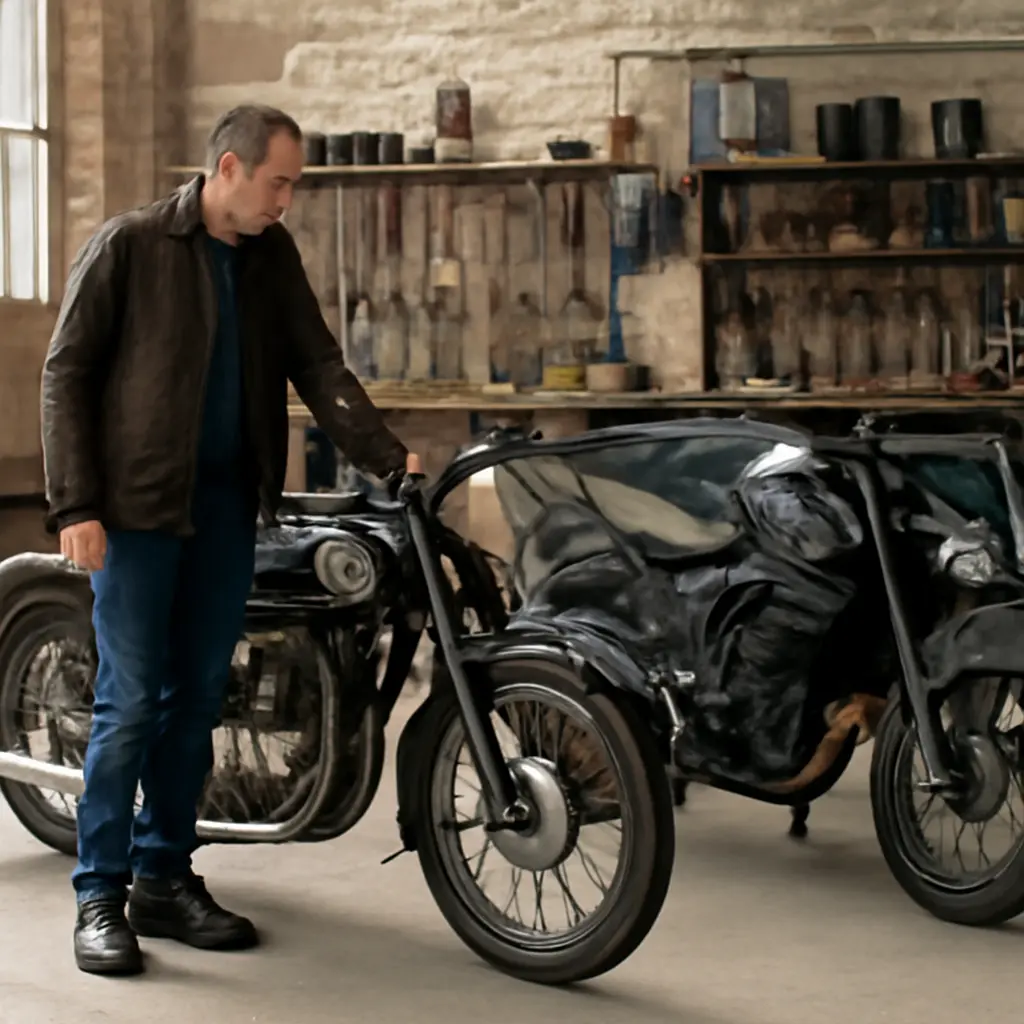
Vintage and modern bikes hold value differently because buyers are paying for different things: rarity, history and character in older machines; performance, condition, technology and ongoing market demand in newer ones. “Vintage bike” has no single universal age cutoff, but classic-motorcycle guides often distinguish collectible older models from recently used motorcycles. The difference matters in a global motorcycle market measured in tens of millions of annual sales: as the Motorcycle Industry Council reports, U.S. new-motorcycle sales reached about 621,000 units in 2023. That flow of new models, parts and changing tastes affects modern resale, while scarcity and provenance can dominate the value of a collectible classic.
Value retention in vintage and modern bikes
Value retention is the extent to which a motorcycle’s resale price holds up relative to its purchase price over time. It is not the same as asking price, insurance value or a guaranteed investment return. Appraisers and pricing guides generally consider a bike’s model, year, condition, originality, mileage, maintenance history and local demand; for collectibles, they also weigh rarity and documented provenance.
The main categories are vintage or classic motorcycles, modern production bikes, and limited-edition or historically significant models that bridge the two. These categories overlap: an older mass-market motorcycle may remain inexpensive, while a modern superbike produced in small numbers can become collectible. A price guide is a useful reference, but completed sales and condition-specific comparisons are better evidence than an isolated advertised price.
Vintage-bike value: scarcity, originality and provenance
A vintage motorcycle’s value is shaped by how many desirable examples remain and how closely a particular bike represents its original specification. Rarity alone is not enough: a scarce model with little buyer demand may be worth less than a more common motorcycle associated with an admired marque, racing success or a major design milestone.
Original components, matching engine and frame numbers, period-correct finishes, service records and a traceable ownership history can strengthen a classic’s appeal. The Antique Motorcycle Club of America’s judging and preservation culture reflects how originality and historical accuracy matter to enthusiasts. Conversely, poor storage, corrosion, undocumented engine changes or restoration using incorrect parts can reduce value, even when the bike looks freshly painted.
Modern-bike value: depreciation, condition and replacement models
A modern motorcycle typically competes with newer examples that offer updated safety equipment, electronics, emissions compliance and warranty coverage. That makes its resale price sensitive to age, mileage, accident history, maintenance and the release of a successor model. Dealers and used-market buyers also account for the cost of tires, chain and sprockets, scheduled servicing and any repairs due soon.
Modern bikes do not all depreciate at the same rate. Popular models with a strong reputation, broad parts availability and sustained demand may retain value better than unpopular or heavily discounted models. Low mileage can help, but a motorcycle that has sat unused for years may need tires, fluids, battery work or fuel-system service. In practice, documented maintenance and a clean title can matter more than a single odometer figure.
Why vintage and modern bike values diverge
The distinction follows from different supply-and-demand conditions. New motorcycles enter the market every model year, giving buyers alternatives and putting pressure on older mass-produced examples. Vintage supply, by contrast, is effectively fixed—and may shrink as bikes are damaged, dismantled or lost—while collector demand can rise or fall with fashion, nostalgia and generational interest.
Production volume and scarcity
Production volume helps explain why two motorcycles of similar age can have very different prices. A rare factory variant or short-run homologation model may command a premium if collectors want it, while a widely produced commuter bike may remain affordable because many examples survive. For modern motorcycles, limited editions can also attract a premium, but the label “limited” does not guarantee long-term appreciation; actual production, survival, condition and buyer interest all count.
Technology, regulation and usability
Modern engineering can support practical resale value. Buyers may prefer fuel injection, anti-lock braking systems, traction control and readily available replacement parts, especially if the motorcycle is intended for regular use. The U.S. National Highway Traffic Safety Administration has required ABS on certain new motorcycles under federal standards, illustrating how safety expectations and regulation evolve over time. Older bikes may lack these features, but their mechanical simplicity and distinctive riding experience can be part of their appeal to collectors.
Emissions rules and parts availability also affect older motorcycles. A bike that is difficult to register or maintain in a particular region may have a narrower buyer pool. In contrast, an iconic classic with strong specialist support can remain desirable despite practical limitations. The market therefore rewards either usefulness or collectibility—but not necessarily both in equal measure.
Condition, restoration and ownership evidence
Condition is a multiplier on the bike’s underlying desirability. A complete, mechanically sound example is often easier to sell than a project, but restoration costs can exceed the eventual increase in market value. Before buying, compare the cost of parts and specialist labor with recent completed sales, rather than assuming that a high-quality restoration automatically produces a profit.
Documentation reduces uncertainty. A modern buyer may look for service invoices, recall work and title history; a vintage buyer may additionally seek build records, period photographs, registration documents and evidence that major components are original. For either category, a pre-purchase inspection can uncover problems that photographs and seller descriptions miss.
Examples and practical comparisons
Consider a well-preserved, historically important British or Japanese classic beside a five-year-old mass-market motorcycle. The classic’s price may depend chiefly on originality, model significance and collector competition. The modern bike’s price is more likely to track mileage, service condition, local supply and the cost of a newer equivalent. These are tendencies, not rules: a rare modern superbike may behave like a collectible, and an ordinary vintage model may depreciate if demand is weak.
A useful comparison chart would plot inflation-adjusted sale prices for the same model across multiple years, separating original, restored and modified examples. Auction records from firms such as Mecum and Bonhams can help identify collectible-market trends, while consumer and dealer pricing guides such as Kelley Blue Book can provide context for mainstream used motorcycles. Since listings are not completed transactions, researchers should compare actual sale prices and note fees, location and condition.
How buyers and owners can protect value
No motorcycle is guaranteed to appreciate. Owners can nevertheless reduce avoidable losses by maintaining records, storing the bike correctly, keeping original parts and avoiding undocumented modifications. For a vintage machine, preserve provenance and seek specialists before making irreversible changes. For a modern bike, follow the manufacturer’s service schedule, address recalls and retain receipts.
- Compare completed sales of the same model, year and condition rather than relying on optimistic asking prices.
- Document maintenance, repairs, ownership and any restoration work.
- Assess total ownership costs, including insurance, storage, parts and specialist labor.
- For collectibles, verify originality and identity numbers; for modern bikes, verify title, service and accident history.
- Buy for the intended use and enjoyment, not on the assumption that resale will produce a profit.
Conclusion: different markets, different measures of value
Vintage bikes tend to hold or gain value when scarcity meets strong demand and the motorcycle retains originality, provenance and historical significance. Modern bikes more often face depreciation because new models, changing technology and comparable used inventory compete for buyers; condition, service history and model popularity can soften that decline. The categories are not absolute, and rare modern motorcycles can become collectibles while common classics remain practical purchases rather than investments.
For a sound decision, compare verified sale data, inspect the individual motorcycle and account for restoration or maintenance costs. Further research through motorcycle price guides, auction archives and marque-owner clubs can help buyers distinguish genuine market value from asking-price optimism.
Sources: Motorcycle Industry Council, Motorcycle Industry Council Reports 621,000 U.S. New Motorcycle Sales in 2023, https://www.mic.org/; Antique Motorcycle Club of America, Judging and Preservation Information, https://www.antiquemotorcycle.org/; National Highway Traffic Safety Administration, Federal Motor Vehicle Safety Standards and Motorcycle ABS Requirements, https://www.nhtsa.gov/; Kelley Blue Book, Motorcycle Values and Pricing, https://www.kbb.com/motorcycles/; Mecum Auctions, Motorcycle Auction Results, https://www.mecum.com/; Bonhams, Motorcycles Auction Results and Catalogues, https://www.bonhams.com/