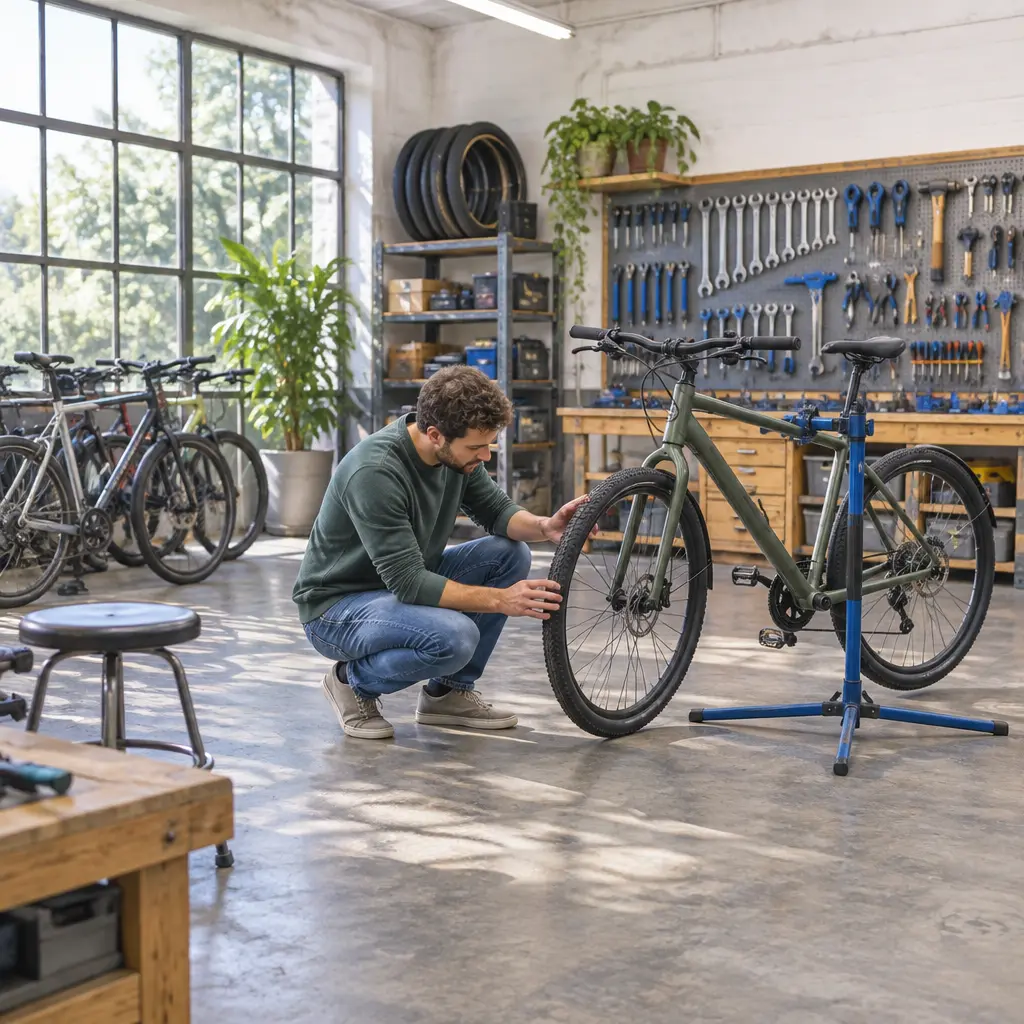
A used bike’s purchase price is only the starting point: the real cost can also include immediate repairs, replacement parts, safety checks, ownership paperwork, and the time needed to find and fix problems. The National Bicycle Dealers Association has reported that Americans buy millions of bicycles each year, while the Bicycle Product Suppliers Association tracks a large and varied U.S. bicycle market—making the secondhand market an important way to save money and reuse equipment. Before buying, budget for a professional inspection and likely maintenance, verify the bike’s identity and ownership, and check that its size and components suit your needs. These steps help distinguish a genuine bargain from a bike that costs more to make safe and reliable.
Used-bike ownership costs include more than the sale price
The hidden cost of a used bike is the additional money, effort, and risk required to make it safe, functional, and suitable after purchase. Bicycle repair professionals commonly assess wear, damage, adjustment, and compatibility rather than judging value from appearance alone. The amount varies substantially: a well-maintained bike may need only a tune-up, whereas a neglected one can require tires, drivetrain parts, brake work, or suspension service. There is no reliable universal repair-cost figure without knowing the bike’s type, condition, parts availability, and local labor rates.
Think of the total as the purchase price plus inspection, repairs, replacement parts, transport, security, and any fees or paperwork. These costs fall into three connected groups: mechanical and safety expenses, fit and compatibility expenses, and transaction and ownership risks. The following sections explain each group and how to estimate it before handing over money.
Mechanical condition drives used-bike repair costs
Mechanical condition is the state of a bicycle’s frame, wheels, brakes, steering, drivetrain, and other components, including how safely and reliably they work under use. The League of American Bicyclists’ safety guidance emphasizes checking essential systems such as brakes, tires, and steering before riding. A visual inspection can identify obvious concerns, but it cannot reliably rule out hidden damage, worn bearings, or problems that appear only under load.
Inspection and tune-up
A pre-purchase inspection is a mechanic’s assessment of the bike’s condition and likely repair needs. A basic tune-up may adjust shifting and braking, tighten or lubricate components, and check wheel alignment, but it does not necessarily include replacement parts or major repairs. Ask the shop what the service includes and whether its estimate separates labor from parts. If a seller will not allow a reasonable inspection, treat that as a risk rather than assuming the bike is sound.
Tires, tubes, and wheels
Tires and tubes are consumable parts: age, cracks, punctures, low tread, or damage can make replacement necessary soon after purchase. Check both tires, rims, spokes, and wheel bearings. Spin each wheel to see whether it wobbles or rubs the brake, and look for cracked rims, loose spokes, or corrosion. Wheel repairs can range from a simple adjustment to a replacement wheel, so a visibly damaged wheel deserves a mechanic’s estimate before you agree on a price.
Brakes and drivetrain wear
The drivetrain transfers pedaling force through the chain, chainrings, cassette or freewheel, and derailleurs; the braking system slows the bike and must work predictably. Worn chains can accelerate wear on more expensive gears, while worn brake pads, damaged cables, or contaminated disc rotors can reduce braking performance. Have a mechanic measure chain wear and inspect the gears and brakes. Replacement needs depend on the bike’s parts and design, and some older or specialized components may be difficult or costly to source.
Frame, fork, and suspension damage
Structural damage is a higher-stakes hidden cost because a cracked or badly damaged frame or fork may make a bicycle unsafe to ride. Inspect welds, joints, and high-stress areas for cracks, dents, or signs of a repair; also check for corrosion and evidence of a crash. On a suspension bike, worn seals, leaking fluid, or neglected service can add expense beyond routine adjustments. The U.S. Consumer Product Safety Commission advises consumers to respond to product hazards and recalls; check whether the specific bike or component has been recalled before purchase.
Fit and component compatibility add ownership costs
Fit and compatibility describe whether the bicycle suits the rider and whether its parts work together or can be replaced with available components. A bike that is mechanically sound can still be a poor purchase if it causes discomfort, needs immediate changes, or uses hard-to-find parts. A test ride, accurate sizing, and a parts check can prevent spending on avoidable alterations.
Incorrect size and fit adjustments
Bicycle size refers to the frame dimensions and riding position appropriate for a particular rider. A test ride should allow comfortable control, safe stopping, and a natural reach to the handlebars; saddle height alone cannot correct a frame that is fundamentally too large or small. Replacing a saddle, stem, or handlebar may improve comfort, but it adds cost and may not solve a poor fit. Ask a reputable shop to confirm the frame size and assess adjustments before buying.
Obsolete, proprietary, or incompatible parts
Parts compatibility is the ability to replace or upgrade components with parts that match the bike’s dimensions and standards. Older, unusual, or proprietary designs may limit choices for wheels, seatposts, suspension parts, batteries, or electronic components. Before purchase, identify the model and year where possible, then ask a mechanic or parts supplier whether essential replacements are available. A cheap bike can become an expensive project if a small, uncommon component is unavailable.
E-bike batteries and electrical systems
For a used electric bicycle, the battery and electrical system are additional cost centers. Battery capacity declines with use and age, and a damaged, unsupported, or incompatible battery can be expensive or difficult to replace. Ask for the battery’s age, charging history, and service records, and request a diagnostic check from a qualified shop familiar with that system. Do not rely only on the display’s remaining-charge reading: it does not establish the battery’s long-term health or safe condition.
Transaction and security risks can turn a bargain into a loss
Transaction costs include the time and expense of confirming ownership, checking the bike’s history, arranging payment and transport, and protecting it after purchase. These costs matter because a bike that cannot be legally or practically transferred—or that is stolen—can leave the buyer without the expected value. Documentation and sensible payment practices reduce avoidable risk.
Ownership checks and stolen-bike risk
A serial number is a bicycle’s identifying number, usually stamped on the frame. Record it and check available registration databases or local police guidance; ask the seller for a receipt or other evidence of ownership. The National Bike Registry and Bike Index provide registration and recovery services, but a database search cannot guarantee that a bike is not stolen. Be cautious if the number has been removed or altered, the seller refuses basic questions, or the price and circumstances seem implausible.
Transport, tools, and security
A purchase may also require transport, a correctly sized lock, lights, a helmet, a pump, or basic tools. These are not repairs, but they are real costs of putting the bike into safe and useful service. Include them in the comparison with a new or refurbished bicycle. A lower sale price may not be a better deal if the bike needs several accessories before it can be used for the intended commute or recreation.
Seller claims, paperwork, and payment
A seller’s description is not a substitute for a condition check or written record. Ask about crashes, repairs, storage, and known faults, and get the agreed price and identifying details on a receipt. Avoid payment methods that provide no practical recourse when the seller or item is misrepresented. For a private sale, meet in a safe public location and do not let urgency pressure you into skipping inspection or verification.
Estimate the total cost before buying
A simple pre-purchase budget makes hidden costs visible. Write down the asking price, inspection charge, quoted repairs, likely replacements, transport, and essential accessories. Then compare that total with a similar bike from a shop, including any warranty or service support. Repair estimates vary by region and shop, so request local quotes rather than relying on a generic online price.
- Identify the bike’s make, model, year, size, and component standards.
- Inspect the frame, fork, wheels, tires, brakes, steering, and drivetrain; arrange a mechanic’s assessment for any uncertainty.
- For an e-bike, verify battery and system condition with a qualified service provider.
- Check the serial number, ownership evidence, and relevant recall information.
- Get written estimates for needed work and add required gear and transport.
- Negotiate based on documented costs, or walk away if safety, ownership, or parts availability remains uncertain.
For example, a commuter bike advertised at a low price may need two tires, brake service, a chain, and a lock. Those costs can quickly reduce the gap between the used bike and a shop-inspected alternative. Conversely, a well-kept bicycle with matching service records and no significant wear may offer substantial value. The key is to compare total ready-to-ride cost, not just the sticker price.
Conclusion: account for the full cost of a used bike
A used bike’s hidden costs usually cluster around mechanical condition, fit and parts compatibility, and transaction and security risks. Tires, brakes, drivetrain wear, structural damage, e-bike battery health, and ownership checks can all change the real price. A careful inspection, a mechanic’s estimate, and a verified seller help protect both your budget and safety. Before buying, calculate the cost to make the bike ready for your actual use—and be prepared to walk away when the risks or repair needs cannot be established.
Sources: National Bicycle Dealers Association, U.S. Bicycle Market Reports, https://nbda.com/industry-data/; Bicycle Product Suppliers Association, Bicycle Market Research, https://www.bpsa.org/; League of American Bicyclists, Smart Cycling: Bicycle Safety, https://bikeleague.org/ridesmart/; U.S. Consumer Product Safety Commission, Recalls and Product Safety, https://www.cpsc.gov/Recalls; Bike Index, Bike Registration and Recovery, https://bikeindex.org/; National Bike Registry, Bicycle Registration, https://www.nationalbikeregistry.com/