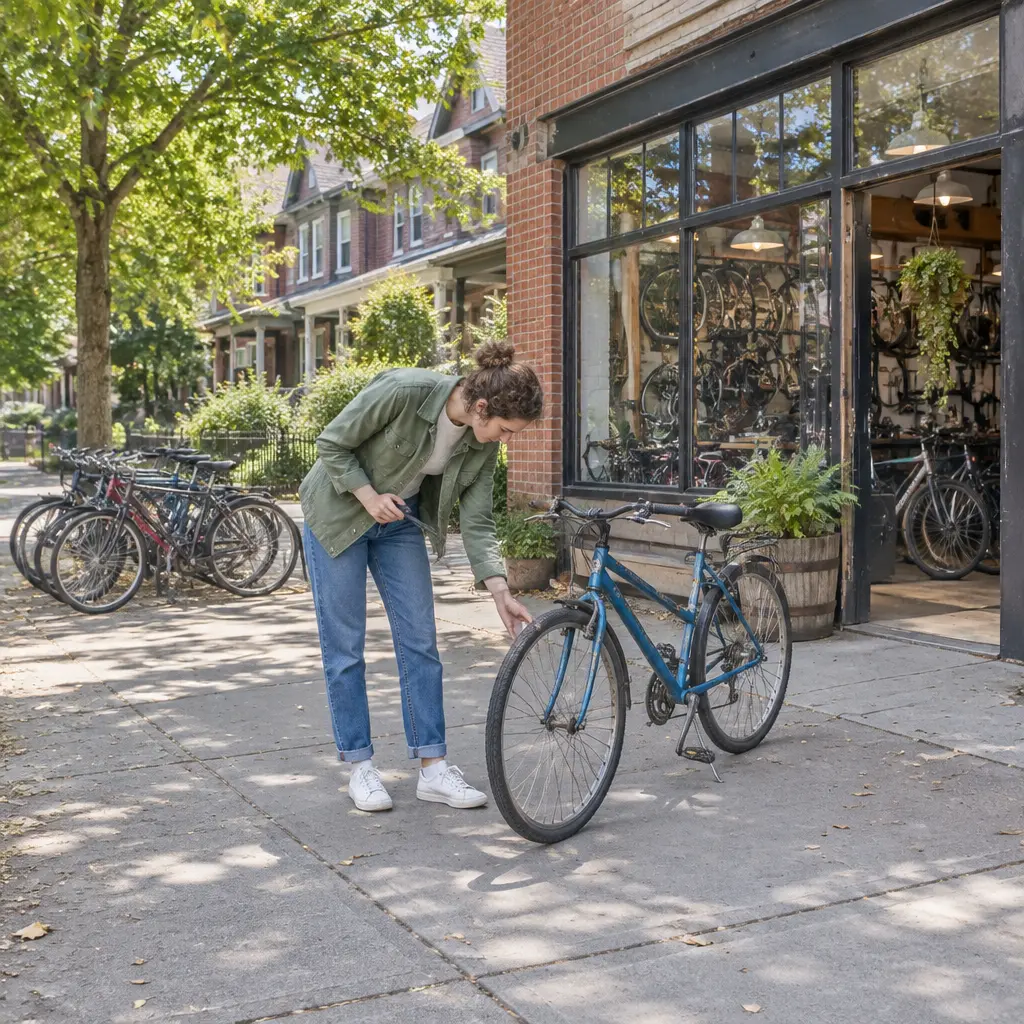
A used bike’s age is the number of years since it was made, but age alone is a poor measure of whether it is worth buying. There is no universal cutoff: a well-maintained 15-year-old bike can be a safer, better-value purchase than a neglected five-year-old one. The useful questions are whether its frame and components are sound, whether replacement parts remain available, whether it fits your needs, and whether its price reflects the work it needs. The age of a bike matters most when it intersects with wear, outdated standards, damage, and the cost of bringing it back into reliable service.
Used bike age and purchase suitability
A used bike is a previously owned bicycle offered for resale or reuse; its age is only one clue to its condition and compatibility. Bicycle Retailer and Industry News has reported that bikes can remain in service for many years, while the U.S. Consumer Product Safety Commission’s bicycle safety guidance emphasizes maintaining brakes, tires, wheels, and other safety-critical parts rather than using age as a pass-or-fail test. In practice, a bike becomes “too old” when it is unsafe, difficult to maintain, incompatible with your intended use, or uneconomical compared with a suitable alternative.
There is no authoritative bicycle-industry rule declaring a bike unfit after a set number of years. A practical age screen is therefore conditional: bikes under about five years old are often easier to assess for current component compatibility, while bikes older than roughly 10 to 15 years merit closer checks for wear, obsolete parts, and standards. These are inspection prompts, not lifespan limits. A sheltered, lightly ridden bike may age well; a newer bicycle exposed to crashes, salt, moisture, or heavy use may not.
Age, model year, and service history
Model year is the manufacturer’s product-generation label, not necessarily the date the bike was first ridden or sold. A late-assembled or long-stored bike can be older than its mileage suggests, while a frequently used bike may have had major components replaced. Ask for receipts, repair records, and details about storage and use. Treat a seller’s estimate of age as a starting point, not proof of condition.
Why “too old” depends on the rider
A bike suitable for a short, fair-weather commute may not be suitable for daily riding, loaded touring, or high-speed road use. Fit, braking performance, intended terrain, and access to a qualified mechanic matter alongside age. For an older bike used for a child, a beginner, or a rider who depends on it for transport, prioritize predictable handling and readily serviceable parts over vintage appeal.
Used bike condition and structural safety
Condition is the bike’s present mechanical and structural state. The U.S. Consumer Product Safety Commission advises riders to check that brakes work, tires are properly inflated and in good condition, and the bicycle is adjusted and maintained. For a used purchase, extend that inspection to the frame, fork, wheels, bearings, drivetrain, and controls. Age can increase the chance of corrosion, fatigue, or dried-out materials, but only inspection can establish whether a particular bike is sound.
Frame and fork integrity
The frame and fork carry the rider and absorb repeated loads, so cracks, bends, deep dents, or corrosion in structural areas are serious warning signs. Inspect welds and joints, the underside of the down tube, the bottom-bracket area, fork crown, and dropouts. On carbon-fiber bikes, look for impact damage, crushed areas, or suspicious repairs; damage can be difficult to judge visually, so professional inspection is prudent. Do not buy a bike with unexplained structural damage for normal riding.
Wear items and hidden maintenance costs
Wear items are parts expected to need replacement through use, including tires, brake pads, chains, cables, and sometimes cassettes or chainrings. A chain wear checker can help identify elongation; a badly worn chain may also have accelerated wear on the cassette and chainrings. Check tire sidewalls for cracks, brake levers for firm action, wheels for wobble or loose spokes, and bearings for grinding or play. A low asking price can be misleading if several parts need replacement at once.
Storage, corrosion, and use history
Storage conditions influence aging: prolonged exposure to rain, road salt, sun, or damp sheds can damage metal, rubber, paint, and cables. Ask whether the bike was stored indoors and whether it was used on roads, trails, or a trainer. Surface rust on a replaceable bolt is different from corrosion affecting a frame, fork, or wheel. If the history is unclear, have a bike shop inspect it before relying on it for regular transportation.
Used bike components and compatibility
Compatibility is the ability to replace or upgrade parts with components that fit the bike’s dimensions and standards. Older bicycles may use parts that are discontinued, uncommon, or harder to source, even when the frame remains usable. The Bicycle Technical Information resource Sheldon Brown’s Bicycle Technical Info documents the many variations in hubs, bottom brackets, headsets, brakes, and drivetrain standards. That variety is one reason a shop’s assessment can be valuable before buying an older model.
Brakes and control systems
Brake type affects stopping performance, maintenance, and replacement options. Older rim brakes can remain serviceable, but worn rims, incompatible pads, or poorly functioning calipers can make repairs costly or compromise braking. Disc brakes also have different mounting, rotor, and hydraulic-fluid requirements. Check that the levers, cables or hydraulic lines, calipers, and braking surfaces work together; a mechanic should evaluate uncertain or weak brakes before the bike is ridden in traffic.
Wheels, tires, and drivetrain standards
Wheel size and axle standards determine which replacement wheels and tires will fit. Older bikes may use less common sizes or axle arrangements, while drivetrain compatibility can depend on the number of gears, cassette or freewheel type, chain width, and derailleur capacity. Before purchase, confirm that tires, tubes, chains, and other likely replacement parts are available locally or online. If a simple puncture repair requires hard-to-find parts, the bike may not be practical as a daily ride.
E-bikes and battery age
An electric bicycle’s age requires special attention to the battery and electrical system. Lithium-ion batteries lose capacity over time and with use, and the extent depends on chemistry, temperature, charging, storage, and cycle history. Ask for the battery’s age, condition, charger, and any available diagnostic report; confirm that the manufacturer or a qualified provider can still service or replace it. A functioning motor does not guarantee a healthy battery, and an unavailable replacement battery can make an otherwise sound e-bike uneconomical.
Used bike value and repair economics
Value is the bike’s usefulness and expected service relative to its purchase and repair cost. There is no reliable universal depreciation figure that can determine whether an individual used bike is a bargain: brand, original specification, condition, local demand, and maintenance history all matter. Compare the total cost—not just the sale price—with a similar bike in ready-to-ride condition. Include immediate repairs, safety checks, replacement parts, and any specialist labor.
When an older bike is a good buy
An older bike can be a sensible purchase when its frame is sound, it fits the rider, its components work, and routine parts are available. A simple steel or aluminum commuter with common tires, brakes, and drivetrain components may be easier to keep running than a newer bike with proprietary parts. Older models can also suit riders seeking a basic, repairable bicycle rather than the newest features. The key is to price any needed work honestly and verify the bike’s condition.
When repair costs outweigh the price
Repair costs can outweigh a bike’s value when it needs multiple expensive jobs, such as a wheel rebuild, drivetrain replacement, suspension service, or unavailable proprietary parts. Get a written estimate for significant repairs and compare it with the cost of a comparable ready-to-ride used bike. Do not assume a repair is worthwhile simply because the bike was expensive when new; current condition and parts support determine the practical value.
A practical pre-purchase checklist
- Confirm the bike fits and is appropriate for the intended riding.
- Inspect the frame and fork for cracks, bends, impact damage, and serious corrosion.
- Test both brakes and check tires, wheels, steering, and bearing play.
- Check chain and drivetrain wear, shifting, and component compatibility.
- Ask about age, storage, crashes, repairs, and available service records.
- Price needed repairs and verify replacement-part availability before agreeing to buy.
- Ask a qualified bike mechanic to inspect it if you are uncertain, especially for carbon frames, suspension, or e-bike batteries.
Conclusion: How old is too old for a used bike?
A used bike is not automatically too old at five, 10, or 15 years. Age is a prompt to investigate, while structural condition, maintenance, parts compatibility, fit, and total repair cost determine whether the bike is safe and worthwhile. Inspect the frame and fork carefully, test safety-critical systems, confirm that replacement parts are obtainable, and seek a mechanic’s opinion when needed. Before buying, compare the full cost of making the bike reliable with a ready-to-ride alternative; that assessment is more useful than the model year alone.
Sources: U.S. Consumer Product Safety Commission, Bicycle Safety, https://www.cpsc.gov/Safety-Education/Safety-Guides/Sports-Fitness-and-Recreation/Bicycles; Sheldon Brown, Sheldon Brown’s Bicycle Technical Info, https://www.sheldonbrown.com/; Bicycle Retailer and Industry News, Bicycle Retailer, https://www.bicycleretailer.com/