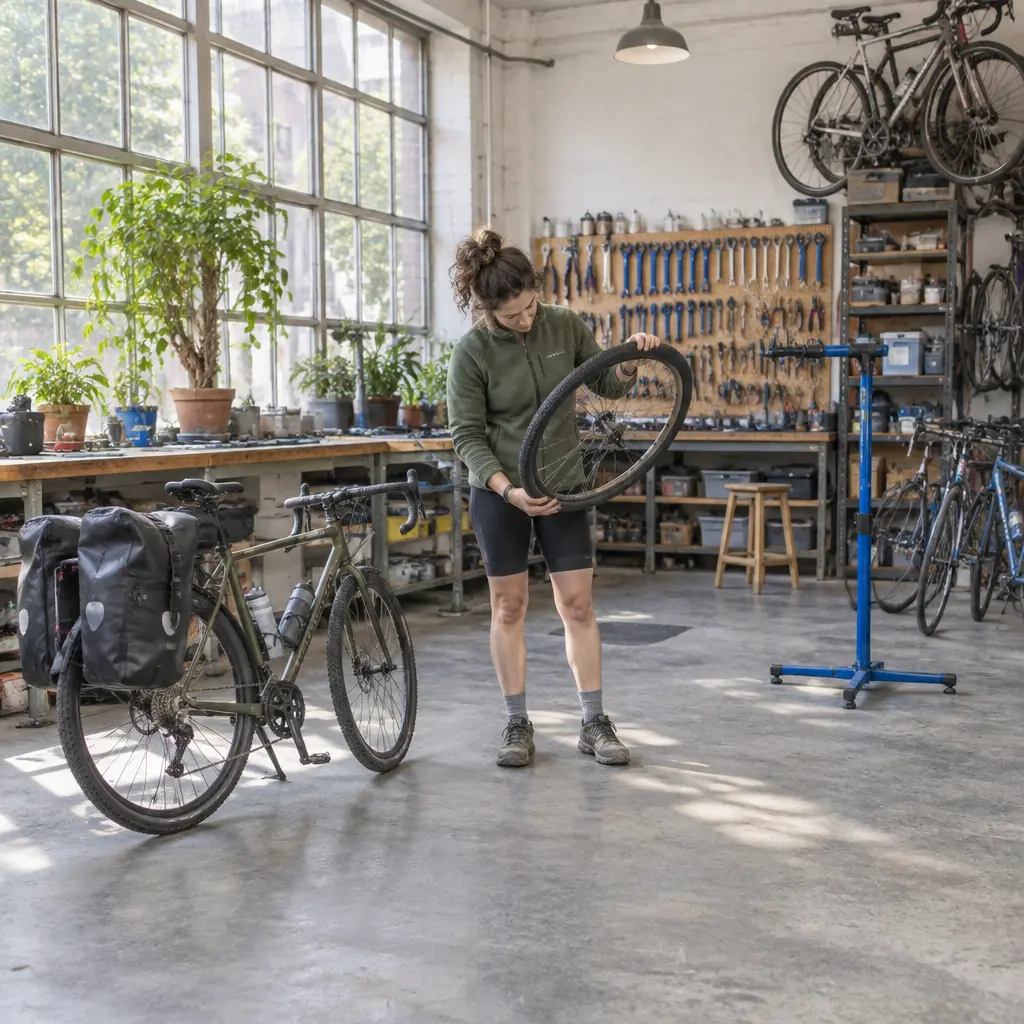
Buying used bike parts can stretch a trip budget or make a race-season upgrade more affordable, but the right deal depends on fit, condition, and safety—not price alone. A used component is a previously owned bicycle part offered for reuse; it can be a sensible choice for items such as wheels, racks, and drivetrain parts when its history and wear are understood. The U.S. Environmental Protection Agency identifies reuse as a way to conserve resources and reduce waste, while bicycle safety guidance from the Consumer Product Safety Commission makes clear that damaged or improperly assembled equipment can create serious hazards. Before buying, check compatibility, inspect wear and crash damage, assess seller and warranty protections, and have safety-critical parts installed or inspected by a qualified mechanic.
Used bike parts: how value, condition, and fit shape a smart purchase
What counts as a used bicycle part?
A used bicycle part is a component that has been installed, ridden, or previously owned and is now being resold, traded, or reused. The category ranges from low-risk accessories—such as bottle cages and racks—to components whose failure can cause a crash, including forks, handlebars, stems, wheels, and brakes. “Used” does not automatically mean unsafe, and “nearly new” does not prove that a part is sound: use history, storage, maintenance, compatibility, and inspection all matter.
Why used parts matter for trip and season budgets
The financial appeal is straightforward: a secondhand component may cost less than a new equivalent and can help a rider repair a touring bike or build a race-season setup within a set budget. The environmental case is reuse. The EPA’s waste-prevention guidance treats reuse as a way to extend product life and avoid discarding usable goods; however, a used part only delivers that benefit if it remains serviceable and does not require costly repairs or premature replacement. There is no reliable universal percentage saving for used bicycle parts: prices vary by brand, age, condition, demand, and local market.
Used bike parts: evaluate fit and compatibility before price
Frame, wheel, and drivetrain standards
Compatibility means that a component’s dimensions, interface, and operating standard match the bicycle it will be fitted to. For wheels, confirm wheel diameter, axle type and spacing, brake interface, and freehub or cassette compatibility. For a drivetrain, check the number of rear speeds, shifter and derailleur compatibility, chain width, crank interface, and bottom-bracket standard. A photograph or seller’s shorthand is not enough to establish fit. Record the bike’s make, model, year, and existing component specifications, then verify them against the bicycle or component manufacturer’s documentation.
Dimensions and interfaces that are easy to overlook
Small dimensional differences can make an apparently good deal unusable. Seatposts must match the frame’s specified diameter; stems must match both steerer and handlebar clamp diameters; and forks must suit the frame’s steerer, axle, brake, and geometry requirements. Brake calipers and levers also need compatible cable or hydraulic systems and appropriate rotor or rim-brake interfaces. If a seller cannot provide measurements or identifying model details, treat compatibility as unverified rather than assuming a mechanic can adapt the part.
A practical compatibility record
Before contacting a seller, make a short fit sheet listing the bike model and year, wheel size, axle dimensions, brake type, drivetrain speed count, and the relevant component measurements. For a touring trip, include rack eyelets, tire clearance, and luggage requirements. For racing, include rules or event requirements that could affect equipment choice. This record helps prevent buying a technically sound part that cannot be safely installed on the intended bike.
Used bike parts: inspect condition and safety risk
Structural components: frames, forks, handlebars, and stems
Structural parts carry rider loads, so visible damage, questionable history, or uncertain material condition deserves particular caution. Look for cracks, dents, deep scratches, corrosion, crushed clamp areas, damaged threads, and signs of repair or repainting that may conceal damage. Carbon-fiber parts require extra care because impact damage may not be obvious from a quick visual check. Ask whether the component has been involved in a crash and request clear photographs of high-stress areas. If its history is unknown or damage is suspected, do not use it for a trip or race without an appropriate professional assessment; replacement is often the safer decision.
Wear parts: chains, cassettes, brake pads, and tires
Wear parts lose useful life gradually, so purchase price should be weighed against remaining service life. A chain-wear gauge can indicate whether a chain is stretched beyond its service threshold; a worn chain may also accelerate cassette and chainring wear. Inspect cassette teeth for hooking or uneven profiles, brake pads for remaining material and contamination, and tires for cuts, cracking, exposed casing, or damaged beads. A cheap worn component can become expensive if it requires replacement immediately or damages adjacent parts.
Wheels, bearings, and suspension
Spin a wheel to check for excessive lateral or vertical runout, feel for loose or rough hub bearings, and inspect rims for cracks, dents, brake-track wear, or damaged spoke holes. On suspension forks and shocks, check for oil leakage, stanchion scratches, damaged seals, and overdue service. A seller’s statement that a part “works” is not a substitute for an inspection, especially where wear may be hidden inside a hub, headset, or suspension unit.
Safety-critical parts and standards
The Consumer Product Safety Commission advises consumers to use bicycles that are properly assembled and maintained and to check equipment before riding. Its bicycle safety guidance underscores why brakes, wheels, steering parts, and structural components deserve more scrutiny than cosmetic accessories. Check for recalls using the manufacturer’s identification information and the relevant product-safety authority’s database. If a part is recalled, has an unknown safety history, or cannot be inspected adequately, do not rely on it for a loaded tour or high-speed race.
Used bike parts: match the buying strategy to the ride
Parts for a bike trip
Touring puts a premium on reliability, serviceability, and carrying capacity. Used racks, panniers, fenders, pedals, and some wheels may be practical purchases when mounts, fasteners, and structural condition check out. For heavily loaded touring, avoid making an unverified structural component the weak link: inspect rack welds and mounting points, confirm wheel suitability for the expected load, and test the complete setup before departure. A short local shakedown ride can expose loose bolts, rubbing tires, brake problems, or luggage interference before the route makes repairs difficult.
Parts for a race season
Racing rewards low weight and performance, but the value of an upgrade depends on condition, fit, and the rules of the event. Used wheels, power meters, drivetrains, and cockpit components can be attractive, yet electronic components may depend on battery health, firmware, proprietary chargers, and continued app or manufacturer support. Ask for a functional demonstration and confirm what accessories are included. Check the governing body’s current technical rules where applicable, and leave time for installation and testing rather than introducing an unfamiliar component immediately before competition.
A real-world example: the “cheap” drivetrain
Consider a rider who finds a used cassette at a sharply reduced price. If the cassette’s wear is severe, a new chain may skip under load; replacing the chain and cassette together can erase the apparent saving. By contrast, a lightly used cassette with known mileage, compatible speed count, clear photographs, and a return option may be a sound purchase. The lesson applies beyond drivetrains: compare the total cost of a usable, compatible installation—not just the listing price.
Used bike parts: verify sellers, price, and recourse
Questions to ask before paying
Ask for the exact model and year, time in service, estimated mileage, maintenance history, crash or impact history, reason for sale, and any known faults. Request close-up images of wear surfaces, serial or model markings, interfaces, and any damaged areas. For electronic parts, ask to see the item powered on and confirm battery condition, charger availability, and included hardware. A seller who is unable or unwilling to answer basic questions is not necessarily dishonest, but uncertainty should reduce the price you are willing to pay—or lead you to walk away.
Compare total cost, not headline price
A useful comparison includes the purchase price, shipping, taxes, installation, any required adapters or small parts, servicing, and likely near-term replacement. Compare that total with a new part’s price, warranty, and expected service life. For an expensive or safety-critical component, a modest saving may not justify losing warranty coverage or the ability to return an item. Local shops may charge for inspection or installation, so ask about those costs before buying an unfamiliar component online.
Payment, returns, and counterfeit concerns
Use a payment method and marketplace process that provide appropriate buyer protection, and keep messages, listing details, and proof of payment. Clarify in writing whether the seller accepts returns if the item is misdescribed or incompatible. Check branding, model markings, serial details, packaging, and build quality for inconsistencies; unusually low prices on high-demand branded parts warrant additional verification. Avoid transactions that pressure you to pay outside the platform or conceal the item’s identity.
Used bike parts: a pre-purchase checklist
- Confirm the exact model, dimensions, interface, and compatibility with the bicycle.
- Inspect for cracks, dents, corrosion, impact marks, excessive wear, and unauthorized repairs.
- Ask about mileage, maintenance, crash history, recalls, and known faults.
- Calculate the complete installed cost, including shipping, service, adapters, and replacement parts.
- Verify seller identity and use a payment method with suitable buyer protection.
- For safety-critical or complex components, arrange a qualified mechanic’s inspection and installation.
- Test the assembled bike under controlled conditions before a long trip or race.
A simple comparison chart can make decisions clearer: list each candidate part, asking price, compatibility status, wear findings, service cost, return terms, and estimated total cost. Mark unknown details explicitly rather than treating missing information as evidence of good condition.
Conclusion: buy used bike parts with evidence, not guesswork
Used bike parts can be a practical way to manage a trip budget, upgrade for a race season, and extend the useful life of equipment. The strongest purchases combine verified compatibility, carefully assessed condition, a credible seller, and a realistic total-cost comparison. Give special scrutiny to structural, braking, wheel, and steering components; treat electronic and suspension parts as service-dependent; and test every installation before relying on it far from home or in competition. Before buying, consult the bicycle and component manufacturers’ specifications, check applicable recall information, and seek a mechanic’s opinion when the consequences of failure are significant.
Sources: U.S. Environmental Protection Agency, Sustainable Materials Management: Non-Hazardous Materials and Waste Management Hierarchy, https://www.epa.gov/smm/sustainable-materials-management-non-hazardous-materials-and-waste-management-hierarchy; U.S. Consumer Product Safety Commission, Bicycle Safety, https://www.cpsc.gov/Safety-Education/Safety-Guides/Sports-Fitness-and-Recreation/Bicycles; U.S. Consumer Product Safety Commission, Recalls, https://www.cpsc.gov/Recalls; Park Tool, Chain Wear and Replacement, https://www.parktool.com/en-us/blog/repair-help/chain-wear-and-replacement; Bicycle Retailer and Industry News, Bicycle Product and Industry Reporting, https://www.bicycleretailer.com/