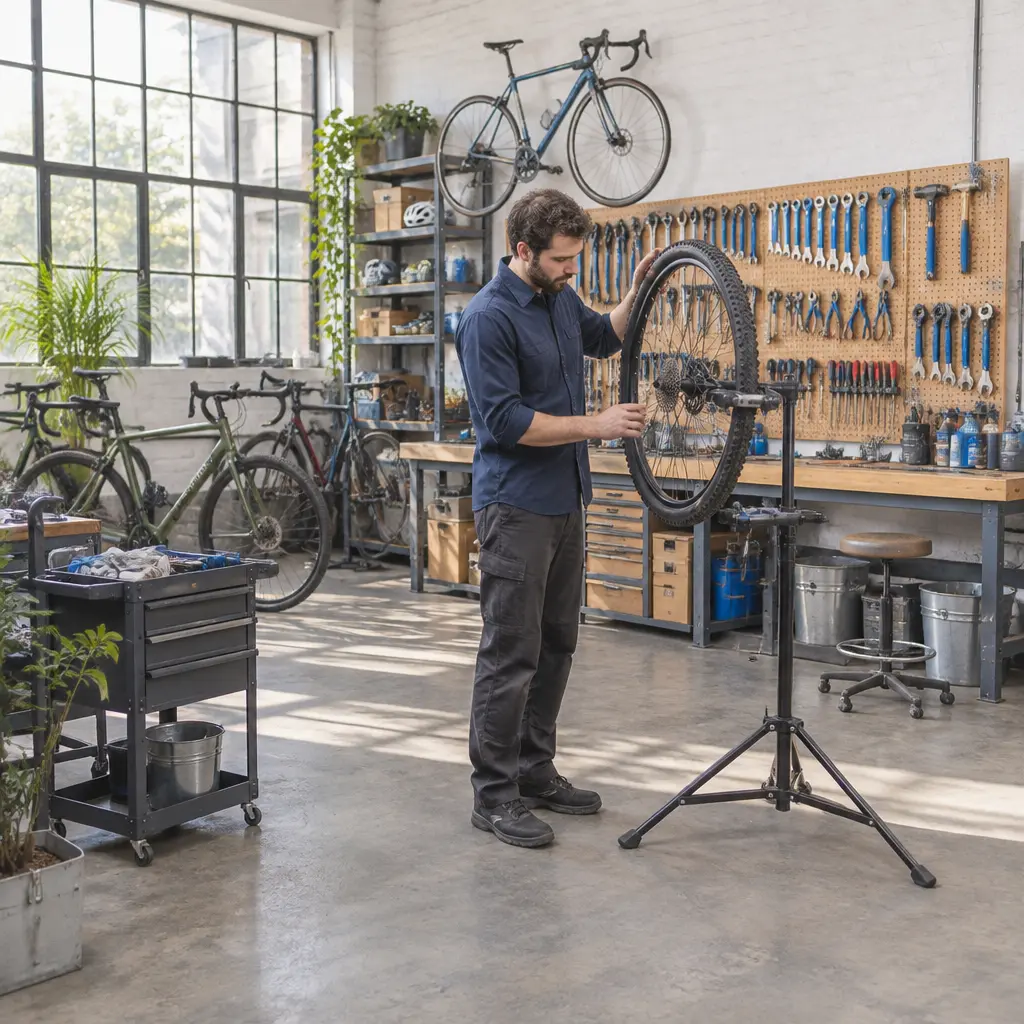
A used bike part is any previously owned component being reused, whether it came from a complete bicycle, a repair shop, or a secondhand marketplace. The first service to do is a careful inspection and cleaning—before installation, lubrication, or adjustment—because dirt can hide cracks, wear, corrosion, and other damage. The right follow-up depends on the part: inspect braking and steering components especially closely, measure wear where possible, and replace anything unsafe rather than assuming it can be serviced back to health.
Inspecting a Used Bike Part Before Service
Inspection is a systematic check of a component’s condition, compatibility, and safety before it is put into use. The U.S. Consumer Product Safety Commission advises consumers to check bicycles for loose, broken, or damaged parts and to keep brakes properly adjusted. That makes inspection the sensible first service for a used component: it establishes whether the part is suitable for cleaning and reuse, needs measurement or repair, or should be rejected.
A used part’s condition cannot be judged reliably by appearance alone. A clean-looking chain may be stretched, a brake rotor may be below its minimum thickness, and a carbon component can have damage that is difficult to see. Start with a visual and tactile check in good light, then use the relevant measurement or manufacturer guidance for the component.
Check for damage, wear, and corrosion
Look for cracks, bends, dents, deep gouges, damaged threads, loose inserts, and corrosion that affects structural integrity. Pay particular attention to areas that carry high loads: fork steerer tubes, handlebars, stems, cranks, pedals, seatposts, and wheel rims. On carbon-fiber parts, do not rely on a “tap test” or appearance alone to certify safety; if there is a crash history, visible damage, or uncertainty, consult the manufacturer or a qualified mechanic.
Wear is component-specific. A chain-wear gauge can help identify elongation; rim-brake rims need inspection for wear indicators and sidewall condition; disc rotors and brake pads should be checked against their marked or manufacturer-specified minimums. Shimano’s technical documentation, for example, specifies wear limits for several braking components, underscoring why a universal visual judgment is not enough.
Confirm compatibility before fitting
Compatibility means that a component’s dimensions and interface match the bicycle and the other parts in the system. Check standards such as wheel size, axle type and spacing, bottom-bracket format, steerer diameter, brake mount, drivetrain speed, and cable or hose routing. A part may be undamaged yet still be unsuitable; forcing an incompatible component into place can damage threads, frames, or safety-critical interfaces.
Cleaning a Used Bike Part After Inspection
Cleaning removes grease, grit, and residue so the part can be examined and serviced accurately. It follows the initial inspection rather than replacing it: a damaged component should not be made to look “good as new” and then treated as safe. Use a clean rag and a product appropriate to the material, and keep solvents and oily cleaners away from brake pads, rotors, and rim-braking surfaces.
Use material-appropriate cleaning methods
For many metal components, mild soap and water or a bicycle-specific cleaner are suitable, followed by thorough drying. Avoid aggressive chemicals unless the manufacturer approves them, especially on carbon, painted surfaces, seals, and plastic parts. Do not direct high-pressure water at bearings or seals: water can force contamination into places that are difficult to dry or inspect.
Keep braking surfaces uncontaminated
Brake friction surfaces need special care. Handle rotors by their edges when practical, and clean them only with a product approved for the braking system. Keep chain lubricant, grease, and oily cloths away from rotors, pads, and rim-brake tracks. If a pad has absorbed oil or a rotor remains contaminated, follow the brake manufacturer’s instructions; replacing affected pads may be safer than attempting to restore them.
Servicing Used Bike Parts by Component Type
Once a part passes inspection and is clean, service it according to its function. The main categories are safety-critical parts, rotating and bearing components, and drivetrain parts. This sequence matters: confirming structural condition comes first, while lubrication and adjustment come later.
Brakes, wheels, and steering components
Brakes, wheels, forks, handlebars, and stems are safety-critical because their failure can immediately affect control. Check fasteners, interfaces, wear limits, and manufacturer torque specifications; use a calibrated torque wrench where the maker requires a specific torque. Inspect wheels for damaged spokes, rim wear, play, and true. If a component is cracked, significantly bent, has damaged threads, or falls below a stated wear limit, do not install it.
Bearings and suspension parts
Bearings should rotate smoothly without roughness, binding, or excessive play. Some sealed units are replaced rather than opened and repacked; serviceable cup-and-cone hubs and headsets require the correct adjustment and grease. Suspension forks and shocks may require model-specific seals, fluids, tools, and service intervals, so consult the manufacturer’s manual or a qualified service provider instead of improvising.
Chains, gears, and other drivetrain parts
For a used chain, check wear with a chain tool or gauge before lubricating it. Clean and dry a reusable chain, then apply bicycle chain lubricant sparingly and wipe away excess, which attracts grit. Inspect cassette teeth and chainrings for wear, and verify that the drivetrain’s speed and chain dimensions are compatible. A worn chain installed on otherwise serviceable gears can accelerate wear across the drivetrain.
A Practical Reuse Example and Safety Check
Suppose a rider buys a secondhand rear wheel. The first step is not simply to add grease or install it: inspect the rim, spokes, hub, axle, and freehub; clean the wheel; check for play and rough bearing rotation; confirm axle spacing, rotor or cassette compatibility, and the rim’s braking condition; then make any appropriate adjustment. If the rim is cracked or worn beyond its limit, or the hub has damage that cannot be safely serviced, the wheel should not be used.
A useful visual aid for a workshop is a simple decision chart: “inspect → clean → measure/test → service if within specification → install and recheck; otherwise replace or refer to a mechanic.” The chart is not a substitute for manufacturer instructions, but it helps prevent the common mistake of treating every used part as a cleaning-and-lubrication job.
Conclusion: Inspect First, Then Service
The first service for any used bike part is a careful inspection, followed by appropriate cleaning. Check for damage, wear, corrosion, and compatibility before deciding whether lubrication, adjustment, repair, or replacement is appropriate. Give extra attention to brakes, wheels, steering, bearings, and drivetrain wear, and follow the component maker’s specifications. If you cannot confidently verify a safety-critical part, have a qualified bicycle mechanic assess it before riding.
Sources: U.S. Consumer Product Safety Commission, Bicycle Safety, https://www.cpsc.gov/Safety-Education/Safety-Guides/Sports-Fitness-and-Recreation/Bicycles; Shimano, Dealer’s Manual and User’s Manual Technical Documents, https://si.shimano.com/