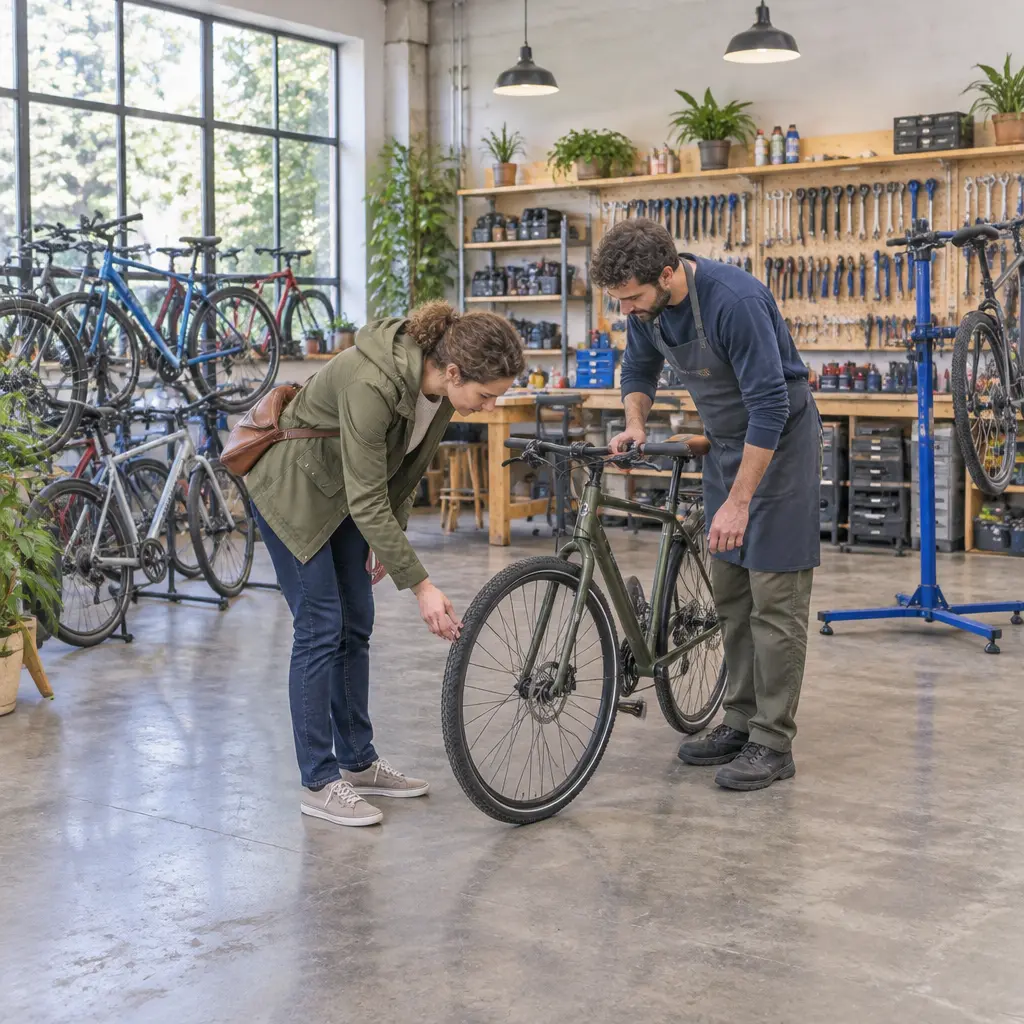
A used bike is a previously owned bicycle whose condition, fit, and maintenance history can vary widely. Before buying one, inspect its frame, wheels, brakes, drivetrain, fit, and ownership documents, then take a careful test ride and compare the price with similar bikes. These checks matter: the U.S. Consumer Product Safety Commission has recalled bicycles and bicycle components over hazards such as brake failures, while Bicycle Retailer and Industry News has reported that the bicycle market includes a substantial secondhand segment. A systematic inspection can help you avoid costly repairs and choose a bike that is safe and suited to your riding.
Check the used bike’s frame and fork condition
The frame and fork are the bike’s structural foundation. There is no single inspection standard that guarantees a used frame is safe, so look for damage and ask a qualified mechanic to assess any concern. Pay particular attention to areas where tubes join, the head tube, bottom bracket, seat tube, and dropouts.
1. Look for cracks, dents, and corrosion
A crack is a split in the frame or fork material; a dent is a local deformation; corrosion is material deterioration, especially on steel. Clean the bike or wipe away dirt so you can inspect it in good light. Check welds, paint that appears to be hiding damage, and the underside of tubes. A small paint chip is not necessarily structural, but a crack, deep dent, bulge, or spreading rust is a reason to stop and get an expert assessment. Do not rely on a seller’s claim that a damaged frame is safe.
2. Check the fork, headset, and alignment
The fork holds the front wheel, while the headset lets it turn smoothly. Look for a bent fork, damaged steerer, or uneven gaps around the front wheel. Hold the front brake and gently rock the bike forward and back; a knock can indicate headset play, though other parts may also make noise. Turn the handlebar from side to side and feel for binding or roughness. A shop can confirm whether a suspected bend or loose bearing is repairable.
Check the used bike’s wheels and tires
Wheels and tires affect stability, braking, and the cost of getting a bike road-ready. Inspect both wheels off the ground if possible, and compare the condition of the rims, spokes, hubs, and tires. A wheel that looks acceptable while stationary can still wobble or have a loose bearing.
3. Spin the wheels and inspect rims and spokes
A true wheel rotates without significant side-to-side or up-and-down wobble. Spin each wheel and watch the rim pass the brake pads or frame. Check for missing or loose spokes, cracks around spoke holes, and dents. With the wheel secured, gently push it side to side to feel for hub play. On rim-brake bikes, inspect the braking surface: a deeply worn or concave rim may need replacement. Wheel condition is especially important on bikes with rim brakes because the rim also serves as a braking surface.
4. Inspect tire wear, age, and compatibility
Tires are the rubber coverings that provide grip and cushion. Look for a squared-off tread, cuts, exposed casing threads, bulges, or cracking along the sidewalls. Check that both tires are the same size as the bike’s rims and have enough clearance from the frame and fork. A worn tire is a predictable replacement expense, but a bulge or exposed casing can make riding unsafe. The U.S. Consumer Product Safety Commission advises consumers to keep bicycle tires properly inflated; use the pressure range printed on the tire rather than guessing.
Check the used bike’s brakes and drivetrain
Brakes and drivetrain components are wear items: they can often be replaced, but their condition affects safety and the bike’s true purchase cost. Bicycle types have different systems, including rim brakes, disc brakes, single-speed drivetrains, and multi-gear setups. Identify what the bike has before estimating repair costs.
5. Test brake function and inspect wear
Brakes slow or stop the bike through pads acting on a rim or rotor. Squeeze each brake lever separately: it should feel firm and should not pull all the way to the handlebar. Check that pads contact the braking surface correctly and that cables, hoses, rotors, and rims are not visibly damaged. On a test ride, try each brake at low speed in a safe, clear area. The CPSC’s bicycle safety guidance stresses properly functioning brakes, and its recall database shows why buyers should also check whether a particular bike or component has been recalled.
6. Check the chain, gears, and crankset
The drivetrain transfers pedaling force through the chain, chainrings, cassette or freewheel, and derailleurs where fitted. Shift through every gear while pedaling gently. Listen for skipping, grinding, or repeated chain drops, and check that the crank arms do not wobble. A chain-wear tool can help a mechanic determine whether the chain has stretched beyond its service limit; a worn chain may also accelerate wear on the cassette and chainrings. Ask when the chain was last replaced and budget for a full drivetrain service if shifting is unreliable.
Check the used bike’s fit and ride quality
Fit describes how the bicycle’s frame dimensions and adjustments suit the rider. A bike that is mechanically sound can still be uncomfortable or difficult to control if it is the wrong size. A test ride helps reveal handling and noises that a stationary inspection may not.
7. Confirm the frame size and adjustment range
Frame size is a starting point, not a guarantee of fit: manufacturers measure and label frames differently, and geometry varies by bike type. Check that you can stand over the frame comfortably where appropriate, reach the handlebars without strain, and adjust the saddle to a useful height without exceeding its minimum-insertion mark. If you feel cramped, overstretched, or unable to control the bike comfortably, try another size or ask a bike fitter or shop for advice.
8. Take a controlled test ride
A test ride is a brief, low-risk check of steering, braking, shifting, and comfort. Agree on a safe route away from traffic, wear a helmet, and start slowly. Listen for knocks or creaks, test each brake gently, and shift through the gears under light pedaling. Notice whether the bike tracks straight and whether the handlebar, saddle, or pedals feel loose. Do not ride a bike with suspected structural damage or brakes that fail to work.
Check the used bike’s history, price, and purchase terms
A fair purchase depends on more than the asking price. Ownership information, recall status, maintenance records, and likely repairs help you judge both legitimacy and value. The National Bike Registry and local police guidance recommend recording identifying details such as a bicycle’s serial number; practices and registration options vary by location.
9. Verify ownership and check for recalls
Ask for the frame serial number, usually stamped or labeled underneath the bottom bracket, and check it against any available local stolen-bike database or registry. Request proof of purchase or other reasonable evidence of ownership. Search the CPSC recall database for the brand, model, and relevant components; recalls can apply to a specific model or production period rather than every bike from a brand. If the seller refuses to provide basic identifying information or the story raises concerns, walk away.
10. Compare total cost, not just the asking price
The total cost of a used bike includes the sale price plus immediate repairs, replacement parts, and any service needed to ride safely. Compare the same model and similar condition across local listings, accounting for age, component specification, and wear. Ask the seller what has recently been serviced and whether receipts are available. If possible, arrange a pre-purchase inspection at a bicycle shop and get an estimate for repairs before agreeing on a price. A lower asking price may not be a bargain if it needs wheels, tires, brakes, and a drivetrain.
Conclusion: Use the ten checks to buy with confidence
Before buying, inspect the frame and fork, wheels and tires, brakes and drivetrain, fit and ride quality, and the bike’s history and total cost. A careful test ride and a mechanic’s inspection can help distinguish ordinary wear from serious safety issues. Check recall information, confirm ownership as far as practical, and price likely repairs before committing. Take your shortlist to a reputable local bike shop for a final assessment, and choose the bike that fits your needs as well as your budget.
Sources: U.S. Consumer Product Safety Commission, Bicycle Safety, https://www.cpsc.gov/Safety-Education/Safety-Education-Centers/Bicycles; U.S. Consumer Product Safety Commission, Recalls, https://www.cpsc.gov/Recalls; National Bike Registry, Bicycle Registration and Theft Prevention, https://www.nationalbikeregistry.com/; Bicycle Retailer and Industry News, Bicycle Market Coverage, https://www.bicycleretailer.com/