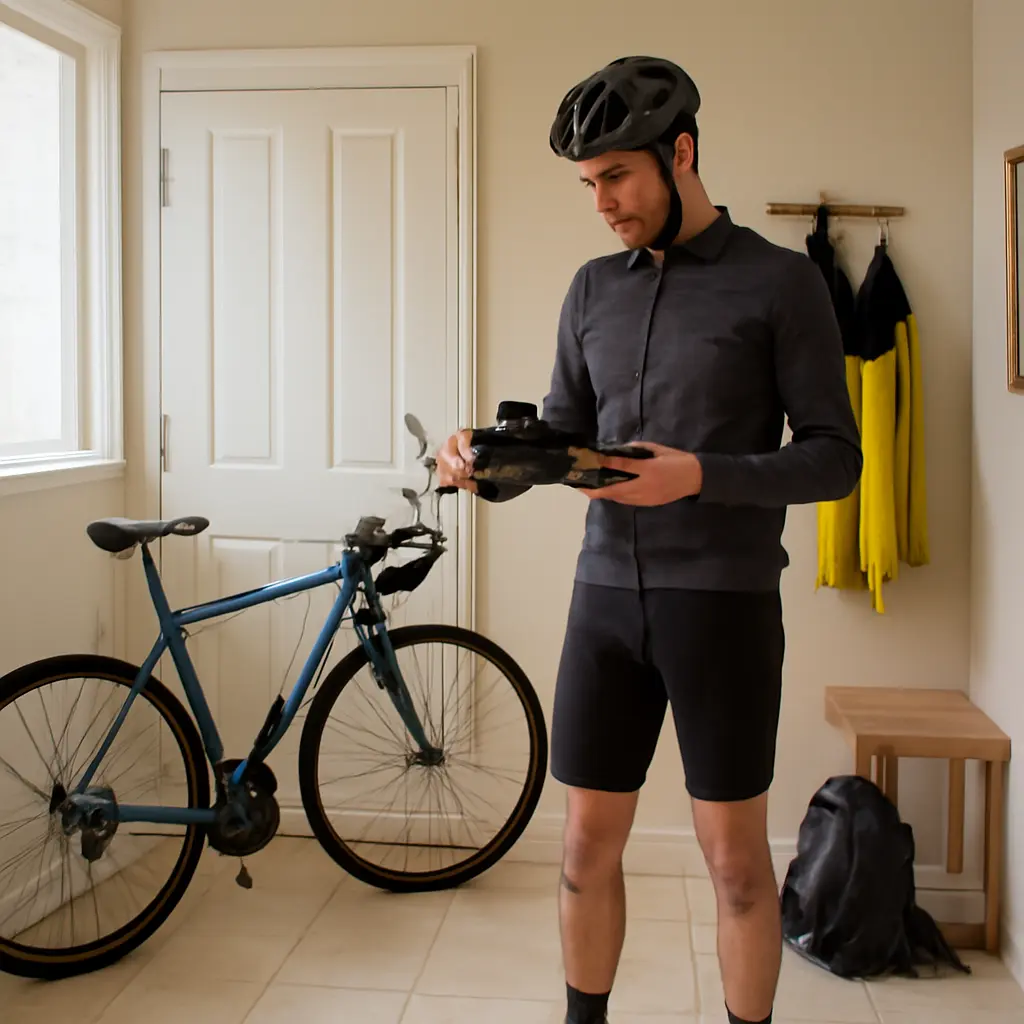
Pre-owned cycling footwear can save money and keep usable gear in circulation, but it may also carry sweat residue, odor-causing microbes, and wear that affects fit and foot health. Cycling shoes are not automatically unsafe when bought secondhand; the practical concern is that a shoe’s prior use and cleaning history are difficult to verify. A careful inspection, appropriate cleaning, and a decision to pass on shoes with damaged or persistently contaminated interiors can reduce avoidable risk. The key issues are microbial residue, moisture and odor, fit-related wear, and what can—and cannot—be sanitized at home.
Pre-owned cycling footwear hygiene: what the risk means
Hygiene in pre-owned cycling footwear means the condition of the shoe’s interior and components with respect to sweat, skin debris, moisture, odor, and organisms that may contribute to infection or irritation. The U.S. Centers for Disease Control and Prevention describes athlete’s foot as a common fungal skin infection that can spread through contaminated surfaces and shared items, including shoes. That does not mean every used shoe harbors infection: risk depends on its previous use, how long it stayed damp, the wearer’s skin condition, and whether it was cleaned and dried properly.
The scale of the broader problem makes sensible precautions worthwhile. The CDC estimates that about 1 in 10 people worldwide are affected by fungal skin infections, including athlete’s foot. This figure is not a measurement of risk from secondhand cycling shoes, but it illustrates why footwear that has been worn against sweaty skin deserves more scrutiny than a used helmet or jersey that can be washed and inspected more easily.
Why cycling shoes need a footwear-specific check
Cycling shoes combine a close-fitting upper, a footbed, straps or dials, and a relatively stiff sole. The upper and footbed can retain sweat and skin flakes, while recessed seams and closures may be difficult to clean thoroughly. A cleat is not itself a hygiene hazard, but grime around the sole and cleat hardware can transfer to hands or indoor floors. Road, mountain-bike, and indoor-cycling shoes may differ in ventilation and construction, so cleaning instructions should follow the manufacturer’s guidance rather than a one-method-fits-all approach.
What the evidence does—and does not—show
Research and public-health guidance support the general point that fungi can persist in warm, damp environments and may spread through contaminated footwear or shared surfaces. They do not provide a reliable infection rate for buying used cycling shoes specifically. Treat claims that a particular used shoe is “germ-free” with caution unless its cleaning history and materials are known; ordinary deodorizing is not the same as disinfection, and neither guarantees sterilization.
Sweat, microbes, and odor in pre-owned cycling footwear
Sweat itself is not the same thing as infection, but moisture, warmth, and organic residue can create favorable conditions for microbes and unpleasant smells. The American Academy of Dermatology advises people with athlete’s foot to keep feet dry, change socks, and avoid sharing shoes and other personal items. For secondhand buyers, that guidance points to the central practical issue: a damp, poorly ventilated shoe with an unknown history is harder to assess and clean than a dry shoe in good condition.
Fungal exposure and shared footwear
Athlete’s foot, or tinea pedis, is a fungal infection that commonly affects the skin between the toes and the soles. The CDC and the American Academy of Dermatology identify shared footwear and contaminated environments as possible routes of exposure. Look for persistent dampness, visible skin flakes, or evidence of an unresolved foot condition, but remember that appearance alone cannot identify or rule out fungus. People with diabetes, impaired circulation, or weakened immune systems should be especially cautious and seek clinician advice if they have foot symptoms.
Odor is a warning sign, not a diagnosis
A strong smell can result from accumulated sweat and bacterial breakdown of skin oils; it does not prove that a shoe contains a contagious pathogen. Conversely, a shoe that smells fresh may have been treated with fragrance without being cleaned. Ask about storage and cleaning, then inspect the footbed, toe box, tongue, seams, and closures. Persistent mustiness, visible residue, or a wet, degraded insole are reasonable reasons to reject a pair, particularly when replacement insoles are unavailable.
Moisture trapped in linings and insoles
Linings and insoles absorb or hold moisture differently depending on their material. A shoe may feel dry on the outside while padding and seams remain damp. Remove only the components the manufacturer says are removable, allow the shoe to air-dry fully, and avoid high heat unless the manufacturer explicitly permits it. Excessive heat can deform materials, weaken adhesives, or damage closures.
Fit, wear, and hidden hygiene problems
A used shoe’s hygiene cannot be separated entirely from its physical condition. Footbeds compress, linings abrade, and closures loosen with use. These changes can make a shoe harder to clean, alter its fit, or create pressure points. The American Academy of Orthopaedic Surgeons notes that ill-fitting footwear can contribute to foot discomfort and problems such as blisters; in cycling, repeated pressure during long rides can make an unsuitable fit especially noticeable.
Footbeds, heel cups, and toe-box wear
The footbed is the layer most directly exposed to the wearer’s plantar surface and sweat. Check for deep impressions, cracking, peeling, persistent discoloration, or an insole that has become misshapen. A replacement footbed can improve cleanliness when the design allows it, but it will not remove residue embedded in the lining or repair a distorted shoe. Check that the replacement does not make the shoe too tight or alter foot support uncomfortably.
Closures, seams, and hard-to-clean recesses
Dial systems, hook-and-loop straps, stitched seams, and tongue folds can collect dirt and skin debris. Open and close each mechanism during inspection and look for material breakdown, corrosion, or residue. A soft brush and a damp cloth may remove ordinary surface dirt, but avoid soaking electronic or mechanical closure parts. If the shoe’s design makes its interior inaccessible and visibly dirty, replacement insoles alone are not a complete cleaning solution.
Cleats and sole condition
Cleats and soles are mainly mechanical wear points, but they matter to overall safety and cleanliness. Check cleat bolts, cracks, loose inserts, and wear indicators where the manufacturer provides them. Dirt near the cleat interface can be brushed away before handling or installing the shoe. A worn or damaged cleat can affect engagement and release; consult the cleat maker’s replacement guidance rather than assuming that a visually acceptable shoe is ready to ride.
How to inspect and clean pre-owned cycling footwear
A useful secondhand routine is to inspect first, clean according to the shoe’s materials, and dry completely before wearing. No home method should be described as guaranteed sterilization. The Environmental Protection Agency distinguishes cleaning from disinfecting: cleaning removes dirt and many germs, while disinfection uses products intended to kill specified organisms when applied according to label directions. A product suitable for a hard surface may not be approved for fabric, leather, or skin-contact materials.
A practical pre-purchase inspection
Before buying, ask how often the shoes were used, whether they were worn without socks, how they were stored, and whether the previous owner had a foot infection. These answers cannot verify cleanliness, but they help establish context. Inspect both shoes in good light and compare wear from left to right. Pass if there is visible mold-like growth, persistent dampness, extensive interior damage, or an odor that remains strong after airing. Do not try on a suspect pair barefoot.
Cleaning without damaging the shoe
Start by removing loose dirt with a dry brush. If the manufacturer permits, wipe washable surfaces with mild soap and water, using a clean cloth; clean removable insoles separately according to their care instructions. Do not use bleach, solvents, or concentrated disinfectants unless the manufacturer confirms compatibility. For leather, adhesives, carbon soles, and electronic closures, care requirements can differ substantially. When using a disinfectant, follow its label for the material, contact time, ventilation, and any rinse requirement.
Drying and first-use precautions
Dry shoes fully at room temperature in a ventilated place, with insoles removed if permitted. Avoid putting them away in a closed bag while damp. On the first ride, wear clean socks and stop if the shoe causes rubbing, numbness, or a hot spot. Afterward, check for skin irritation or unusual odor. People who develop itching, scaling, cracking, or a rash should stop sharing or wearing the shoes and consult a healthcare professional for diagnosis rather than relying on deodorizer or over-the-counter treatment without guidance.
When to buy, replace, or walk away
Secondhand cycling shoes can be a reasonable purchase when they are structurally sound, dry, cleanable, and a good fit. The decision is less attractive when a pair is heavily worn, poorly stored, difficult to clean, or being sold with no opportunity to inspect it. Replacing an insole may address one contact surface, but it does not reverse damaged padding, a stretched upper, a compromised closure, or an unknown contamination concern.
A simple buyer decision guide
- Buy only if the shoe fits securely and does not create pressure points during a careful try-on with clean socks.
- Prefer a pair with removable, replaceable insoles and a clearly intact interior.
- Walk away from visible mold-like growth, persistent moisture, severe odor, or material that is peeling or crumbling.
- Confirm cleat compatibility and inspect the sole, cleat mounts, and closure systems for damage.
- For recurring foot infections or higher medical risk, ask a clinician whether used footwear is appropriate for you.
Reuse, cost, and responsible disposal
Buying used can extend the life of functional equipment and reduce the demand for new products, but reuse is not automatically the best choice if a shoe is unsanitary or structurally unsafe. A local bike co-op or gear-reuse program may accept clean, serviceable footwear; ask about its acceptance rules rather than donating shoes that are wet, moldy, or badly damaged. If a shoe cannot be cleaned safely or no longer fits, dispose of it according to local waste and textile-recycling options.
Conclusion: make pre-owned cycling footwear a deliberate choice
The main hygiene issues with pre-owned cycling footwear are uncertain sweat and microbial exposure, moisture and odor trapped in the interior, and wear that makes a shoe harder to clean or fit safely. Public-health guidance confirms that fungal skin infections can spread through shared footwear, while available statistics describe the broader prevalence of fungal infections—not a specific infection rate for secondhand cycling shoes. Inspect carefully, clean only with material-compatible methods, dry completely, and replace insoles when appropriate. If the shoe is visibly contaminated, damaged, persistently smelly, or uncomfortable, choose another pair. Buyers can also consult the CDC, the American Academy of Dermatology, and the shoe manufacturer’s care instructions for further guidance.
Sources: U.S. Centers for Disease Control and Prevention, About Fungal Diseases, https://www.cdc.gov/fungal/about/index.html; U.S. Centers for Disease Control and Prevention, About Athlete’s Foot, https://www.cdc.gov/athletes-foot/about/index.html; American Academy of Dermatology Association, How to Prevent Athlete’s Foot, https://www.aad.org/public/diseases/a-z/athletes-foot-prevent; U.S. Environmental Protection Agency, What’s the Difference Between Products that Disinfect, Sanitize, and Clean Surfaces?, https://www.epa.gov/coronavirus/whats-difference-between-products-disinfect-sanitize-and-clean-surfaces; American Academy of Orthopaedic Surgeons, Foot and Ankle Conditioning Program, https://orthoinfo.aaos.org/en/recovery/foot-and-ankle-conditioning-program/