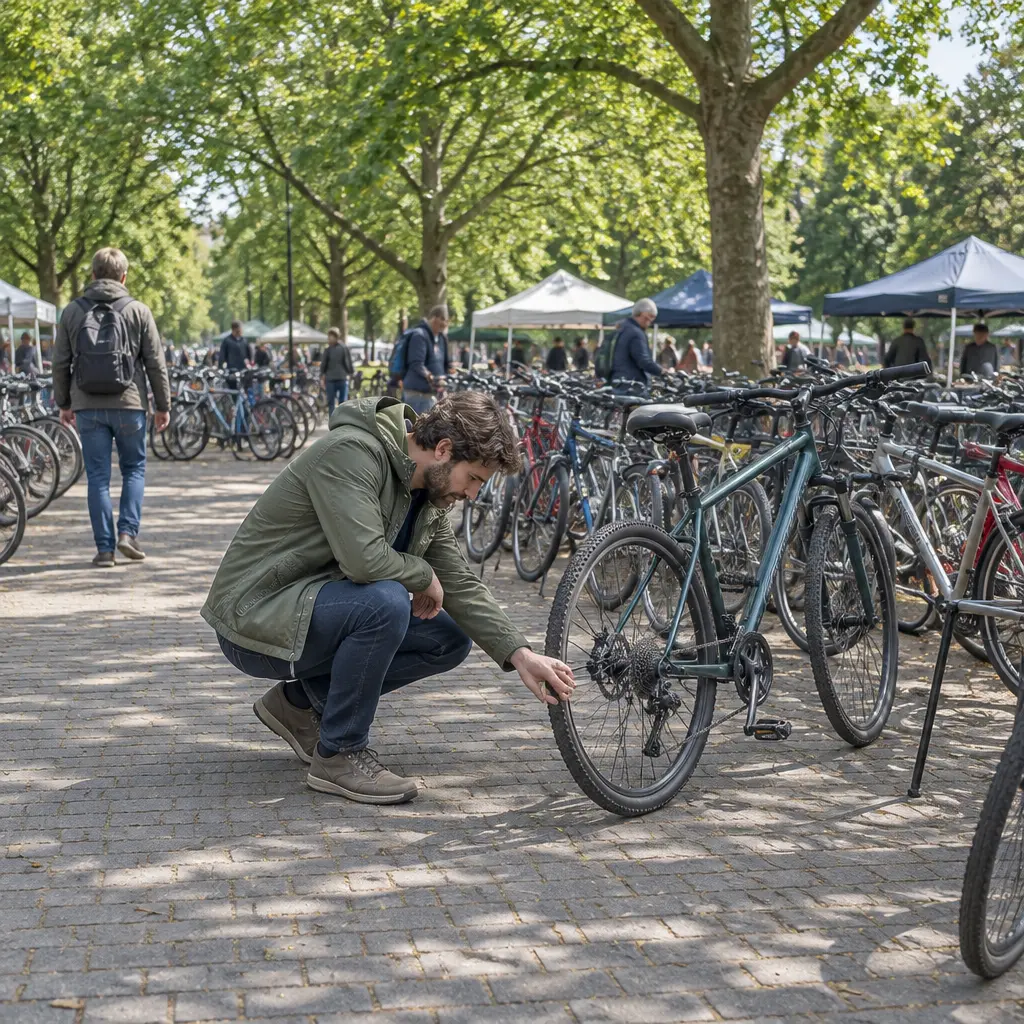
A used bicycle is a previously owned bike whose value depends not just on its asking price but on its condition, fit, service history, and likely repair costs. The best bargains are sound, well-maintained bikes priced below the cost of buying an equivalent new model; money pits are often neglected or damaged bikes whose hidden repairs erase the savings. The distinction matters: cycling-industry surveys and marketplace listings show that used-bike prices vary widely by age, type, and condition, while even ordinary replacement parts and labor can add substantially to the purchase price. A careful check of the frame, drivetrain, wheels, brakes, fit, and ownership history helps buyers judge the total cost—not just the sticker price.
Used-bike value depends on total ownership cost
A used bike is a bargain when its fair market price plus immediate repairs and foreseeable maintenance remains meaningfully lower than the cost of a comparable bike in reliable condition. It becomes a money pit when defects, unavailable parts, poor fit, or uncertain ownership add costs or risks that outweigh the discount. This is a practical buyer’s definition rather than a formal accounting standard: compare the bike’s purchase price, required work, and expected upkeep against a trustworthy alternative.
That comparison is important because bicycles have no single depreciation curve. A basic commuter, a high-end road bike, an electric bike, and a vintage model age differently. Component wear, storage, maintenance, technology, and local demand can matter more than the year printed on a frame. Bicycle Retailer and Industry News has reported industry sales and market trends, but there is no universal, authoritative percentage that describes how much every used bike should depreciate. Treat online asking prices as clues—not proof of value—and compare bikes with similar specification and condition.
The price is only one part of the equation
Total cost includes the asking price, parts, labor, and any safety or fit changes needed before regular use. A bike listed cheaply may need tires, tubes, brake pads, a chain, and a professional tune-up. Those items can turn a seemingly large discount into a small one. Ask a local shop for an estimate before committing if the work is outside your skills or the bike has unfamiliar components.
Condition and service history shape value
Condition is the combined state of the frame, fork, wheels, bearings, drivetrain, brakes, and accessories. Maintenance records, receipts, and a seller who can explain repairs add confidence, although they do not replace inspection. A bike kept indoors and cleaned regularly may be a better buy than a newer bike stored outside or ridden with worn parts.
Mechanical condition separates bargains from liabilities
Mechanical condition means whether a bicycle’s structure and components operate safely and within reasonable repair limits. The U.S. Consumer Product Safety Commission’s bicycle safety guidance emphasizes maintaining and checking brakes, tires, wheels, and other essential parts. For a used-bike buyer, the central distinction is between ordinary wear—such as a worn chain or brake pads—and structural damage, which can make a bike unsafe or uneconomical to repair.
Frame and fork damage can outweigh every discount
The frame and fork are the bicycle’s main structural components. Look for cracks, dents, deep gouges, bent areas, unusual ripples in paint, and signs of a crash or improvised repair. Inspect welds and joints closely, and check carbon components for impact damage, crushing, or suspiciously fresh paint. A visual check cannot reliably rule out every crack, especially in carbon fiber. If damage is suspected, have a qualified mechanic inspect it; do not ride a bike with a potentially compromised frame or fork.
Drivetrain wear is measurable—and can become expensive
The drivetrain includes the chain, cassette or freewheel, chainrings, derailleurs, and shifters. A worn chain can accelerate wear on the cassette and chainrings, so delaying replacement may increase the repair bill. Park Tool’s chain-wear guidance describes using a chain checker to measure elongation; the appropriate replacement threshold depends on the chain and drivetrain, so follow the manufacturer’s guidance or ask a mechanic. During a test ride, check that gears shift consistently under moderate pedaling and that the chain does not skip under load.
Wheels, tires, and brakes affect safety and repair cost
Wheels should spin without major wobble, rubbing, or loose spokes, and hubs should turn smoothly without obvious play. Tires with cracked sidewalls, exposed casing, or little usable tread are likely replacement items. Brakes should engage firmly and predictably; worn pads, frayed cables, damaged hydraulic hoses, or contaminated disc rotors deserve attention. These are often repairable faults, but several together can consume the apparent savings. A test ride should include controlled braking in a safe area.
Bike type and age change what counts as a good deal
A bike’s category determines which features, wear points, and replacement parts matter most. Road, mountain, commuter, cargo, and electric bikes should not be judged against one another by price alone. The best comparison is with a similar model, size, specification, and condition—and with the cost of making it fit the buyer’s actual use.
Road and mountain bikes can hide costly component wear
Road bikes may have lightweight wheels, narrow tires, and tightly integrated parts; mountain bikes may have suspension, dropper posts, and components exposed to impacts and mud. Suspension servicing can be a major expense if maintenance has been skipped. On either type, check that replacement parts remain available and that the equipment suits the terrain. A high-specification bike is not a bargain if its specialized parts are worn, obsolete, or difficult to service locally.
Commuter and utility bikes reward practical simplicity
A commuter or utility bike is built for dependable everyday transport, often with practical additions such as racks, lights, fenders, or an internal-gear hub. These accessories can add real value if they work and match the buyer’s needs. Check that racks are secure, lights function, and enclosed or internal gearing shifts correctly. A simpler bike with common parts can be a better long-term purchase than a cheaper model with neglected proprietary components.
Used electric bikes need battery and system checks
An electric bike adds a battery, motor, controller, display, and wiring to the usual inspection. The U.S. Department of Energy notes that lithium-ion battery performance changes with use, temperature, and aging; a battery’s remaining capacity cannot be judged reliably from appearance alone. Ask for the battery’s age, charging and storage history, diagnostic report if available, and replacement cost. Confirm that the charger is correct and that the manufacturer or a qualified service provider can support the system. A low asking price is not persuasive if the battery is near replacement and replacement is unavailable or costly.
Fit, ownership, and transaction risk affect the real bargain
A mechanically sound bike can still be a poor purchase if it does not fit, cannot be used comfortably, or has an unclear ownership history. The National Highway Traffic Safety Administration recommends proper bicycle fit and regular safety checks as part of safe riding. Buyers should therefore assess both the machine and the transaction: a safe, correctly sized bike from a credible seller is usually worth more than an uncertain bargain.
Fit has practical and financial value
Fit is the relationship between a rider’s body and the bike’s frame dimensions and contact points. A test ride can reveal an uncomfortable reach, poor saddle position, or handling that feels wrong, but it does not replace checking frame size and adjustment range. Some issues can be corrected with a different stem or saddle; a fundamentally wrong frame size usually cannot. Consider fit before paying for upgrades that will not solve the underlying problem.
Ownership checks protect buyers from stolen property
A seller should be able to explain where the bike came from and provide any available receipt, serial number, or registration record. Check the serial number against a recognized bicycle registry where available, and avoid a transaction if the number has been removed or the seller refuses reasonable questions. Bike Index, a nonprofit bicycle registry, encourages recording serial numbers and ownership details to help identify and recover stolen bikes. A suspiciously low price, rushed sale, or inconsistent story is a warning sign, not a bargain.
Parts availability and compatibility determine repairability
Compatibility describes whether replacement parts will work with the bike’s frame and existing components. Older or unusual bikes may use standards that are difficult to source, while common modern parts are generally easier for shops to obtain. Before purchase, identify the wheel size, brake type, drivetrain configuration, and any proprietary components. Ask a mechanic whether essential replacement parts are available, especially for suspension, electronic systems, and older specialty models.
A disciplined inspection makes the decision clearer
A consistent process helps buyers avoid being swayed by a polished listing or a low sticker price. The checklist below is useful for most bicycles, but it is not a substitute for a mechanic’s assessment when a bike has structural damage, complex suspension, or an electric drive system.
- Compare the model, size, components, and condition with similar local listings and reputable shop prices.
- Ask about purchase date, storage, crashes, repairs, and recent parts replacement; request receipts where available.
- Inspect the frame, fork, wheels, tires, brakes, drivetrain, headset, and bottom bracket for damage, wear, looseness, or unusual noise.
- Test-ride the bike in a safe area, checking fit, steering, shifting, braking, and wheel stability.
- Price all known repairs and verify that replacement parts and qualified service are available.
- Confirm the serial number and ownership story, then make the offer based on total cost rather than asking price alone.
For illustration, imagine two bikes listed at the same price. One has a clean frame, common parts, smooth shifting, and recent service records. The other needs a chain, cassette, tires, brake work, and an uncertain electric-bike battery. The first may be the better value even if it is older; the second’s total cost and risk could quickly exceed the price of a more dependable alternative. This comparison is an example, not a claim about typical repair prices, which vary by region and model.
Conclusion: Judge used bikes by value, not by the sticker
Used-bike bargains combine a fair price with sound mechanical condition, suitable fit, repairable components, and credible ownership. Money pits commonly involve structural damage, extensive deferred maintenance, expensive battery or suspension problems, poor fit, or hard-to-source parts. Evaluate total cost, inspect the bike systematically, and seek a professional opinion when safety or repairability is uncertain. Before buying, compare similar models, verify ownership, and ask a local shop to estimate the work; that small investment can prevent a much larger one.
Sources: U.S. Consumer Product Safety Commission, Bicycle Safety, https://www.cpsc.gov/Safety-Education/Safety-Guides/Sports-Fitness-and-Recreation/Bicycles; Park Tool, Chain Wear: How to Check for Chain Elongation, https://www.parktool.com/en-us/blog/repair-help/when-to-replace-a-chain-on-a-bicycle; U.S. Department of Energy, Lithium-Ion Battery, https://www.energy.gov/energysaver/lithium-ion-batteries; National Highway Traffic Safety Administration, Bicycle Safety, https://www.nhtsa.gov/road-safety/bicycle-safety; Bike Index, About Bike Index, https://bikeindex.org/about; Bicycle Retailer and Industry News, Industry News and Market Coverage, https://www.bicycleretailer.com/