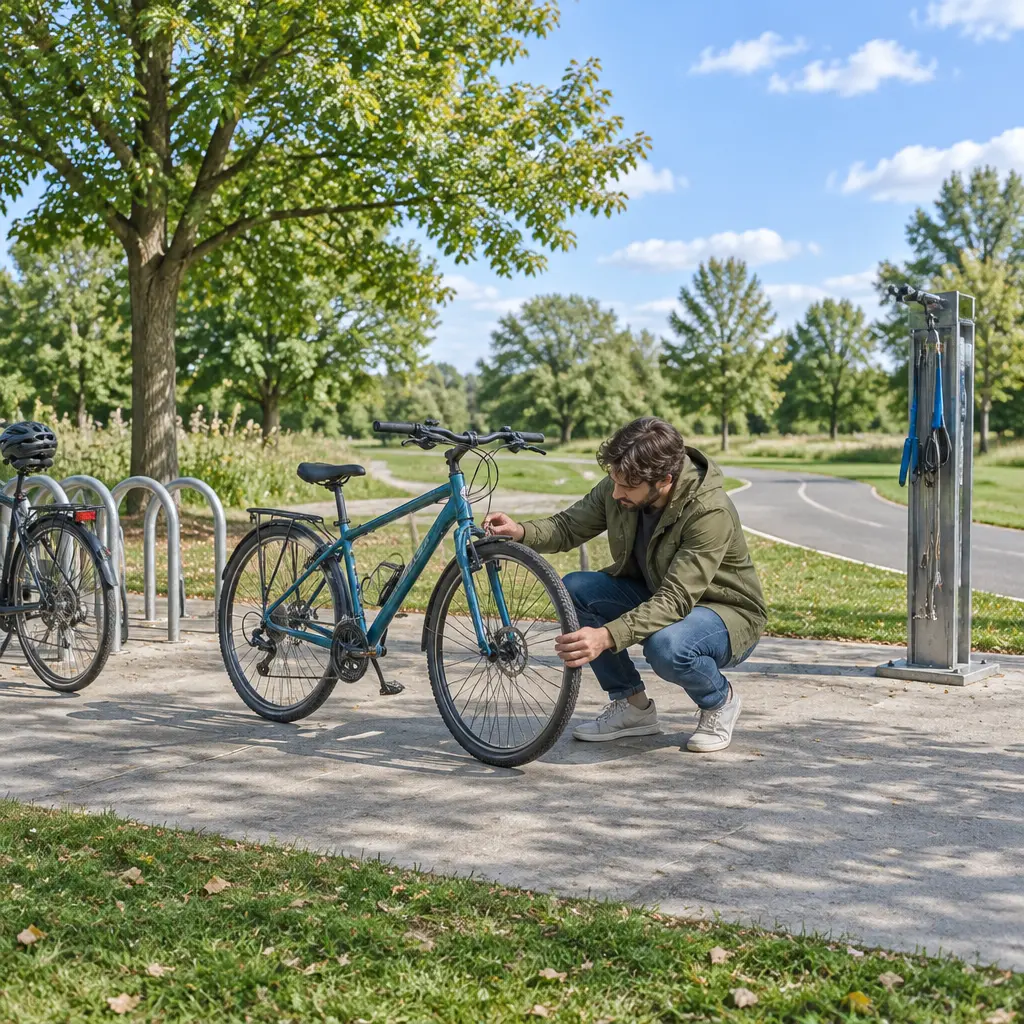
A used bike’s condition is its mechanical safety, structural integrity, and likely maintenance needs—not just how clean or new it looks. Before buying, inspect the frame and wheels, test the brakes and gears, check wear items, and take a careful test ride; then compare any needed repairs with the asking price. This matters because a hidden crack, worn drivetrain, or failing brake can turn a bargain into a costly or unsafe purchase. The checks below draw on practical inspection guidance from bicycle-safety organizations and manufacturers, including the National Highway Traffic Safety Administration (NHTSA), the League of American Bicyclists, and Park Tool.
A used bike’s condition: what to inspect before buying
A bike’s condition is best judged across several connected areas: frame and fork integrity, wheel and tire health, braking and shifting performance, component wear, and fit. No single quick check proves a bike is safe, so look for consistent evidence across the whole bicycle. A smooth test ride is useful, but it cannot rule out hidden damage or parts that are close to wearing out.
Frame and fork: check for damage before cosmetics
The frame and fork form the bike’s primary structure. Inspect them in good light, wiping away dirt where necessary. Look closely around welds, joints, the head tube, bottom bracket, seat tube, and rear dropouts for cracks, dents, deep scratches, corrosion, or signs of a repair. A small paint chip is not automatically structural damage, but a line that continues through the material or opens when the area is gently loaded warrants professional assessment.
Carbon-fiber frames deserve particular care: impact damage may not be obvious from the surface. Do not buy a carbon bike with suspicious cracks, soft spots, crushed areas, or an unexplained history of a crash unless a qualified carbon specialist has inspected it. For any material, walk away if the seller dismisses visible structural damage or refuses a reasonable inspection.
Wheels, tires, and bearings: look for straight, secure movement
Spin each wheel and watch the rim or tire pass the brake pads or frame. A slight wobble may need wheel truing; a large side-to-side movement, cracked rim, loose spokes, or damaged hub can mean a more substantial repair. Lift the wheel and gently rock it side to side to check for bearing play. The wheel should turn freely without grinding or obvious looseness.
Inspect tires for cuts, exposed casing, bulges, cracking, and a squared-off or heavily worn tread. Check that both tires hold air and that the rims are compatible with the braking system. Tire condition is a practical cost indicator: fresh tires may be a modest routine expense, while a damaged wheel or hub can require specialist work.
Brakes and drivetrain: test the systems that control the ride
Brakes should engage predictably and release without rubbing. Squeeze each lever: it should not pull all the way to the handlebar. Inspect rim-brake pads for adequate material and correct alignment; for disc brakes, check rotor condition and listen for persistent rubbing. On a safe, level test ride, test each brake separately at low speed before relying on them in traffic. NHTSA’s bicycle safety guidance emphasizes checking that brakes work before riding.
The drivetrain includes the chain, cassette or freewheel, chainrings, derailleurs, shifters, and crankset. Shift through the gears while pedaling gently. The chain should move across the gears without repeated skipping, severe noise, or hesitation. Look for rust, stiff chain links, bent teeth, and a chain that appears excessively worn. Park Tool explains that chain wear can accelerate wear to the cassette and chainrings, so a neglected chain may signal additional replacement costs.
Cockpit, steering, and fit: confirm control and comfort
Check that the handlebar, stem, saddle, and seatpost are secure and free of cracks or severe corrosion. Hold the front brake and gently rock the bike forward and back; knocking near the headset may indicate looseness. Turn the handlebar from side to side and confirm that steering feels smooth, with no binding or excessive play.
Fit is part of condition because an otherwise sound bike that is the wrong size may be uncomfortable or difficult to control. During the test ride, you should be able to steer and brake confidently, reach the controls without strain, and pedal without feeling cramped. Ask a local bike shop to confirm sizing if you are unsure, especially for a road, mountain, or cargo bike with a geometry that differs from what you normally ride.
A used bike inspection: a practical step-by-step process
A repeatable inspection makes it easier to compare bikes and avoid being distracted by brand names or a freshly cleaned appearance. Bring a small flashlight and, if possible, a knowledgeable friend. Do not dismantle parts or ride the bike in unsafe conditions without the owner’s permission.
- Ask about the bike’s age, use, crash history, storage, and recent maintenance. Request receipts or service records where available.
- Confirm the frame size and check that the serial number is present and legible. Consider checking local stolen-bike registries or reporting tools; a seller should be willing to explain ownership.
- Inspect the frame, fork, wheels, tires, brakes, drivetrain, and controls in that order, noting defects rather than relying on memory.
- Lift and spin the wheels, check for bearing play, and test each control while the bike is stationary.
- Take a short test ride in a safe area. Test steering, braking, shifting, and unusual noises at low speed.
- List immediate repairs and obtain a shop estimate for any safety-critical or uncertain issue before agreeing on a price.
A simple comparison table can help: record each bike’s asking price, frame condition, brake performance, drivetrain wear, tire and wheel condition, and estimated repair cost. This makes a lower sticker price easier to evaluate against the actual cost of getting the bike road-ready.
Used bike warning signs: when to pause or walk away
Some defects are ordinary maintenance items; others create safety or ownership concerns. A worn tire or brake pad can often be priced into the deal. A cracked frame, fork damage, a wheel that cannot be secured, or brakes that fail to stop reliably should not be treated as minor bargaining points.
- Cracks, significant dents, suspected carbon damage, or evidence of an unverified structural repair.
- Brakes that do not engage securely, a badly damaged rim or rotor, or a wheel that is loose in its dropouts.
- Repeated chain skipping, a bent derailleur, severe bearing play, or grinding that the seller cannot explain.
- A missing or altered serial number, unclear ownership, or pressure to pay before you can inspect or test the bike.
- A seller who refuses a reasonable test ride, a basic inspection, or an independent shop check.
If a bike has a potentially serious defect, ask an independent mechanic to assess it before purchase. A professional inspection is especially worthwhile for expensive bikes, carbon frames, full-suspension mountain bikes, and electric bikes, whose motors, batteries, and electronic systems add checks beyond a conventional bicycle.
Used bike price and repair costs: judge the complete value
The fair price is not simply the seller’s asking price. It is the purchase price plus immediate repairs, required safety equipment, and any maintenance that is likely to be due soon. Ask a shop for an estimate when a repair involves wheels, suspension, hydraulic brakes, carbon, or e-bike electronics. Parts availability and compatibility also matter: an older or unusual component may cost more to replace than its appearance suggests.
For example, imagine two similar commuter bikes. One costs more but has sound tires, reliable brakes, and a recently serviced drivetrain; the cheaper one needs tires, a chain, and brake work. Comparing the total ready-to-ride cost—not just the listing prices—may make the better-maintained bike the more economical choice. This is an illustrative comparison, not a market-price estimate.
Conclusion: buy the bike’s condition, not just its appearance
A careful used-bike check starts with the frame and fork, then evaluates wheels and tires, brakes, drivetrain, steering, and fit. A test ride reveals how the bicycle behaves, while a repair estimate helps establish its real cost. Treat structural damage, ineffective brakes, ownership concerns, and unexplained mechanical faults as reasons to pause or walk away. Before buying, use the checklist, document likely repairs, and arrange an independent mechanic’s inspection whenever a safety issue is uncertain.
Sources: National Highway Traffic Safety Administration, Bicycle Safety, https://www.nhtsa.gov/road-safety/bicycle-safety; League of American Bicyclists, Bicycle Safety, https://bikeleague.org/ridesmart/bike-safety/; Park Tool, Chain Wear and Chain Replacement, https://www.parktool.com/en-us/blog/repair-help/chain-wear-chain-replacement; Consumer Product Safety Commission, Bicycle Safety, https://www.cpsc.gov/Safety-Education/Safety-Education-Centers/Bicycles