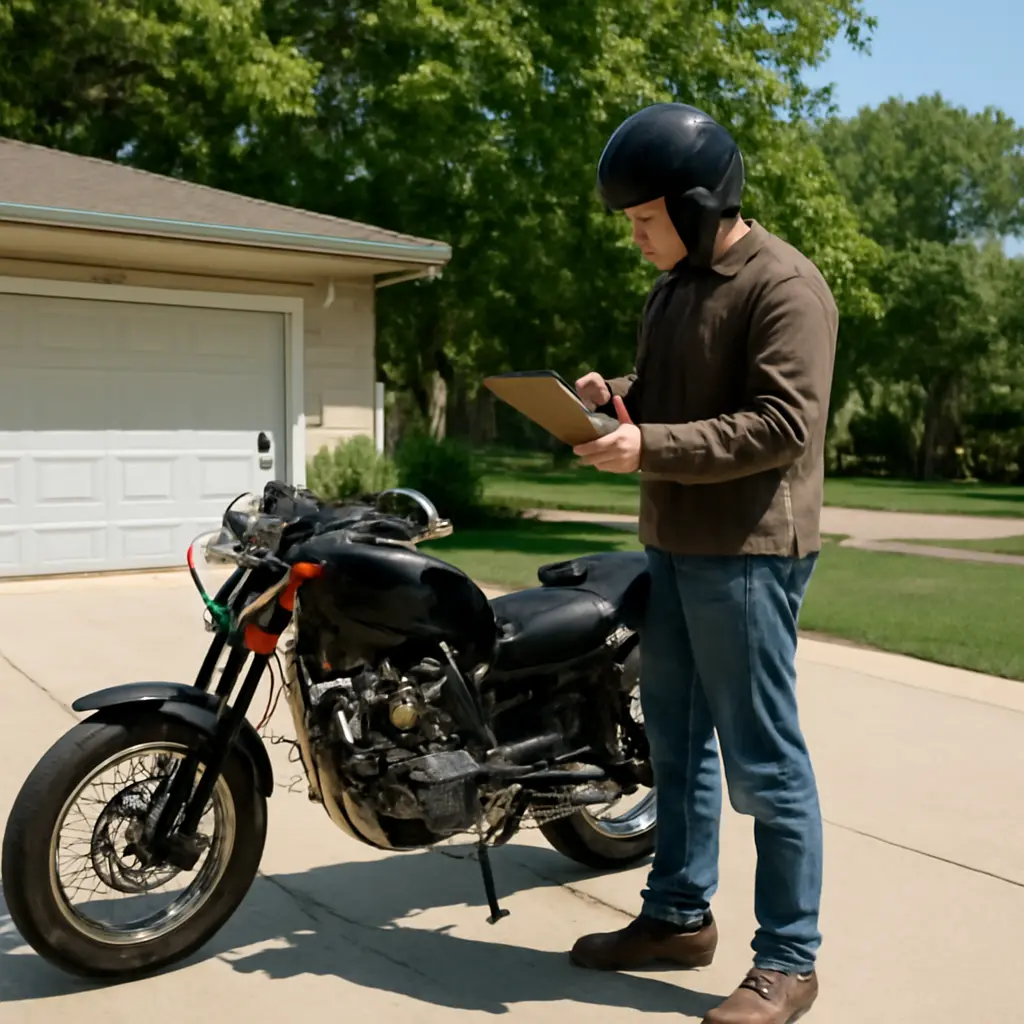
Selling a motorcycle privately can put more money in a seller’s pocket than trading it in, but the difference is not guaranteed: it depends on the bike’s condition, local demand, asking price, and the time and costs required to complete a sale. Kelley Blue Book’s motorcycle values distinguish between trade-in and private-party estimates, while Cycle Trader’s marketplace shows why sellers must compare similar listings rather than assume an advertised price is a completed-sale price. To estimate what a private sale really earns, account for the dealer offer, realistic sale price, preparation and transaction expenses, and the value of your time.
Private Motorcycle Sale Proceeds: What the Seller Actually Keeps
A private motorcycle sale is a direct transaction between an owner and a buyer, rather than a sale to a dealer or a trade-in tied to another purchase. The seller’s gross price is not the same as their net proceeds: net proceeds are the money remaining after sale-related expenses and any loan payoff are accounted for. Kelley Blue Book provides separate motorcycle trade-in and private-party value estimates, reflecting the different purposes and economics of those transactions.
The difference can be meaningful, but it should be evaluated with a like-for-like comparison. A dealer offer may be lower because a business must inspect, prepare, market, and resell the motorcycle, and may need to account for holding costs and uncertainty. A private buyer may pay more, but the seller takes on the advertising, inquiries, inspections, negotiation, paperwork, and risk of a transaction that falls through.
Gross sale price versus net proceeds
Gross sale price is the amount the buyer agrees to pay. Net proceeds are what the seller retains after subtracting costs such as detailing, minor repairs, advertising fees, secure payment or escrow charges, title-related fees where applicable, and the lender payoff on a financed bike. The payoff is especially important: a sale price below the loan balance does not clear the debt, and the seller must arrange to pay the difference.
For example, suppose a dealer offers $5,000 and a private buyer pays $6,200. If preparation and transaction costs total $250, the private sale leaves $5,950 before any loan payoff—$950 more than the dealer offer. If the bike requires $700 in repairs to achieve that price, the advantage narrows to $250. This is an illustrative calculation, not a market quote; actual figures vary by motorcycle and location.
The trade-in comparison
A trade-in is a dealer credit applied toward another vehicle purchase, rather than simply a cash offer. Its value should be compared with the private-sale proceeds after considering the whole deal, including the replacement vehicle’s price, financing, and any tax treatment that applies in the seller’s jurisdiction. Kelley Blue Book’s motorcycle valuation categories can help establish a starting point, but its estimates are guides—not guaranteed offers or confirmed transaction prices.
A useful comparison is to request a written, no-obligation dealer offer and then compare it with a conservative private-sale estimate based on closely matched motorcycles. That turns “dealers pay less” into a practical question: how much additional money is realistically available after expenses and effort?
Private-Sale Pricing: How to Estimate a Realistic Motorcycle Value
Private-sale pricing is the process of estimating what a willing buyer is likely to pay in a direct transaction. Kelley Blue Book’s motorcycle valuation framework separates private-party value from trade-in value, while online marketplaces such as Cycle Trader display asking prices for motorcycles offered by dealers and private sellers. The distinction matters: listings reveal competition and seller expectations, not necessarily final sale prices.
Compare motorcycles with the same make, model, model year, engine size or trim, and broadly similar condition. Then adjust for mileage, maintenance records, tire and brake life, damage, modifications, accessories, title status, and season. A touring bike with documented service and fresh tires is not directly comparable to a high-mileage example needing immediate work, even if both share a model name.
Market comparables and asking-price limits
A market comparable is a similar motorcycle being offered in the same broad geographic market. Use several listings rather than anchoring on the highest price, and check how long listings remain available when that information is visible. An asking price is a seller’s proposed price; it does not prove a buyer paid that amount. Because public marketplace listings generally do not provide a comprehensive record of completed private transactions, treat them as evidence of competition, not as definitive sale-value data.
A practical approach is to set three figures: a target price supported by comparable listings, a likely negotiating range, and a minimum acceptable net amount. Price the motorcycle according to its documented condition and be prepared to explain the basis for the figure. If there are few local examples, widen the search carefully and account for transportation costs and regional differences.
Condition, service history, and modifications
Condition affects both buyer confidence and the amount a buyer may need to spend immediately after purchase. Clear photographs, maintenance receipts, an accurate description of defects, and a motorcycle history report where available can support a credible asking price. NHTSA’s VIN-related resources and the National Motor Vehicle Title Information System (NMVTIS) can help consumers check vehicle-history information, though records may not capture every event and motorcycles may be covered differently across reporting sources.
Aftermarket parts do not automatically increase resale value by their full purchase cost. A buyer may value quality luggage or protective equipment but discount nonstandard tuning, removed original parts, or modifications that complicate inspection, insurance, or maintenance. Preserve stock components when possible and list upgrades factually rather than treating their retail price as an automatic addition to the motorcycle’s value.
Private-Sale Costs and Risks: What Can Reduce the Extra Earnings
Private-sale costs are the direct expenses and practical risks involved in preparing, marketing, and transferring a motorcycle to an individual buyer. They include visible charges—such as cleaning, repairs, listing fees, or payment services—and less visible costs, particularly the seller’s time and the possibility of fraud or a failed transaction. The Federal Trade Commission advises consumers to be alert to common payment and check scams, making safe payment practices part of the sale calculation rather than an optional extra.
The private-sale premium is therefore not simply the private asking price minus a dealer offer. A more useful measure is the difference between realistic private-sale net proceeds and the dealer’s net offer, after all costs and any applicable tax or loan considerations.
Preparation and transaction expenses
Preparation can include a wash, basic maintenance, small repairs, replacement parts, and the time needed to gather records and take photographs. Spend selectively: fix safety-related or easily verified issues when the likely price benefit justifies the expense, but do not assume a major repair will return its full cost at sale. Keep receipts for completed work and disclose anything that remains unresolved.
Paperwork and fees vary by state and transaction. The seller should verify local requirements for the title, odometer disclosure where applicable, bill of sale, release of liability, registration cancellation, and license plates. State motor vehicle agencies are the authoritative source for local transfer rules; do not rely on a generic checklist as a substitute for jurisdiction-specific instructions.
Time, convenience, and opportunity cost
Opportunity cost is the value of the seller’s time and of the convenience given up by handling the sale personally. Responding to messages, screening buyers, arranging viewings, accommodating inspections, negotiating, and completing paperwork can take several hours or longer. If a private sale would net $600 more but requires ten hours of work, the seller is effectively earning $60 per hour before considering the chance of delays or problems.
That calculation is personal. Someone who enjoys maintaining and selling motorcycles may consider the extra effort worthwhile; a seller who needs a quick, predictable transaction may reasonably accept a lower dealer offer. Convenience is a real part of the value being compared, even when it does not appear as a line item on a bill.
Fraud prevention and safe payment
Payment risk includes counterfeit cashier’s checks, overpayment schemes, suspicious shipping arrangements, and requests to refund money before a payment has cleared. The FTC’s consumer guidance recommends skepticism toward buyers who send more than the agreed amount or ask the seller to forward funds. Confirm payment independently with the financial institution, and do not hand over the motorcycle or signed title until payment is verified and the required transfer steps are clear.
Meet in a safe location, follow local rules for test rides, and verify that a prospective rider has the required license and appropriate insurance. Do not leave the motorcycle, keys, or original title with an unverified buyer. When a lender holds the title, contact the lender in advance to understand how it will process the payoff and title release.
Private Sale or Dealer Trade-In: Choosing the Better Route
The better route depends on the seller’s priorities as well as the likely price. A private sale may produce higher proceeds when demand is strong and the motorcycle is easy to document and show. A dealer sale or trade-in may be preferable when speed, simplicity, a single transaction, or help with an outstanding loan is more valuable than pursuing the highest possible price.
When a private sale is more likely to pay off
A private sale is worth investigating when comparable motorcycles show active buyer demand, the bike is in sale-ready condition, and the owner can manage inquiries and paperwork safely. Popular models, desirable configurations, complete maintenance records, and a clear title can make it easier to explain the motorcycle’s value. These are practical indicators, not guarantees of a particular premium.
The seller should test the market with a defensible price and reassess if serious inquiries do not appear. A listing that attracts only low offers may be overpriced, poorly presented, or competing with better-value examples. Adjusting the price or improving the listing can be more effective than waiting indefinitely for a buyer who may not exist.
When a dealer offer may be the rational choice
A dealer offer can be attractive when the motorcycle needs work, the seller lacks time, the bike is difficult to transport or demonstrate, or a prompt sale is important. Dealers can handle resale preparation and may be able to coordinate a trade-in or loan payoff, although the owner should confirm the payoff process and all figures in writing. Compare the actual offer—not an estimated value—with a realistic private-sale net figure.
For a trade-in, separate the motorcycle’s allowance from the replacement vehicle’s negotiated price. This helps reveal whether a seemingly generous trade-in figure is offset elsewhere in the deal. Check the final paperwork and, where relevant, ask a tax professional or state agency how the transaction is treated locally.
Conclusion: Calculate the Private-Sale Premium Before You List
Private motorcycle sales can earn more than dealer trade-ins, but the true gain is the net difference—not the gap between an advertised price and a dealer quote. Use Kelley Blue Book’s separate valuation categories as a starting point, compare carefully matched marketplace listings, account for condition and local demand, and subtract preparation, transaction, loan, and time costs. Then weigh the additional earnings against the dealer’s convenience and the responsibilities of a direct sale.
Before deciding, obtain a written dealer offer, estimate a realistic private-sale price, and calculate net proceeds using conservative assumptions. Check your state’s title-transfer requirements, protect yourself from payment scams, and disclose the motorcycle’s condition accurately. A short, evidence-based comparison can show whether skipping the dealer middleman is genuinely worth it for your bike.
Sources: Kelley Blue Book, Motorcycle Values and Pricing, https://www.kbb.com/motorcycles/; Cycle Trader, Motorcycle Marketplace, https://www.cycletrader.com/; Federal Trade Commission, How to Avoid a Scam, https://consumer.ftc.gov/articles/how-avoid-scam; National Motor Vehicle Title Information System, Consumer Access, https://vehiclehistory.bja.ojp.gov/; National Highway Traffic Safety Administration, Vehicle Information and VIN Decoder, https://www.nhtsa.gov/vin-decoder.