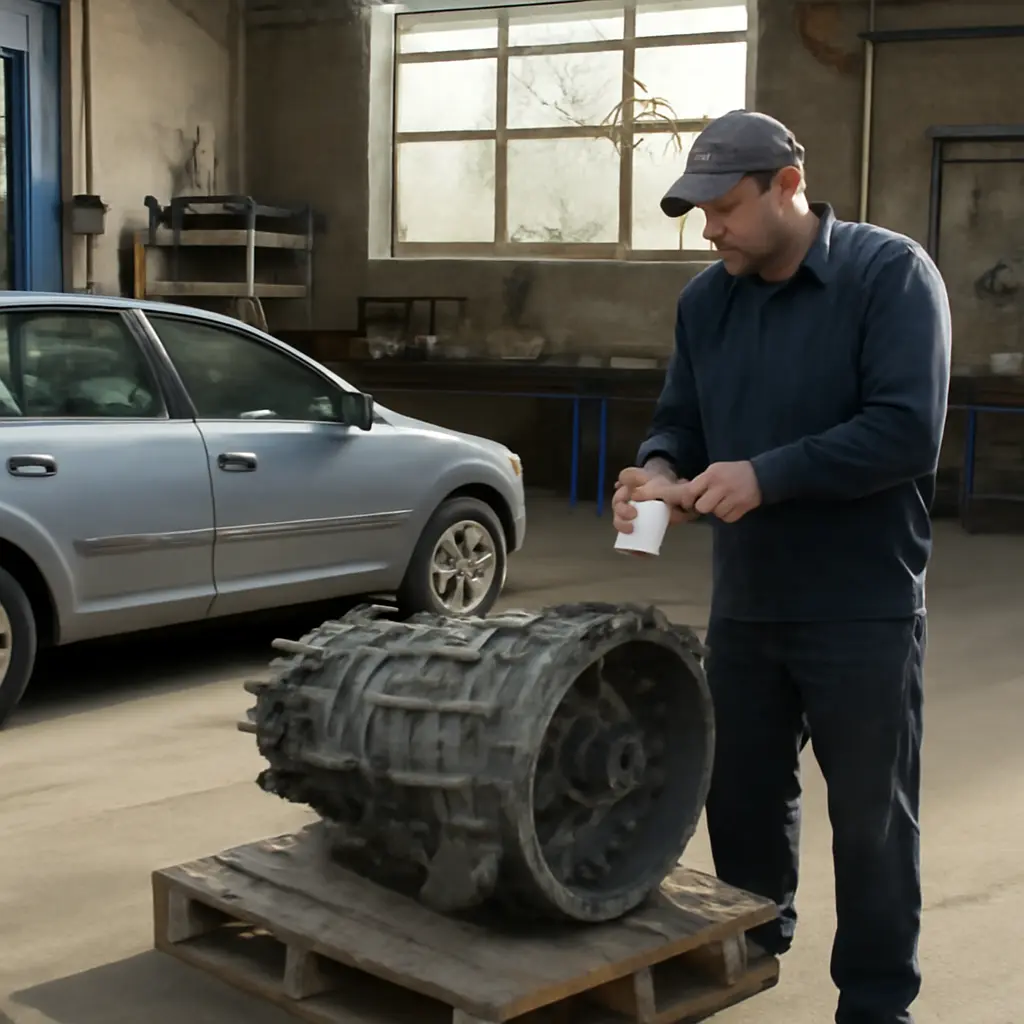
Used drivetrain parts are previously installed components—such as transmissions, differentials, transfer cases, axles, and driveshafts—sold for reuse. The five most expensive buying mistakes are choosing an incompatible part, trusting an unverified condition claim, overlooking damage or contamination, misjudging total installed cost, and skipping return or warranty checks. These errors matter because drivetrain failures can lead to towing, labor, repeat repairs, and safety risks, while a cheap purchase price alone says little about whether a part will fit or last.
Compatibility checks prevent expensive used drivetrain part mistakes
Compatibility means confirming that a replacement component matches the vehicle’s exact configuration and can operate correctly with the other connected parts. Automakers and parts catalogs identify fitment using details such as vehicle identification number (VIN), year, make, model, engine, transmission code, axle ratio, drivetrain layout, and production date. A shared model name is not enough: two vehicles from the same year may use different transmissions, connectors, gear ratios, or transfer cases.
This is the first mistake to avoid because installation labor may be owed even when a part does not fit. Before purchase, compare the original part number and identification tag with the donor part, and ask a qualified parts specialist or repair shop to verify fitment. NHTSA’s VIN guidance explains that a VIN encodes vehicle-specific information, but VIN decoding alone does not establish that every used component is compatible; the part’s own identification and the vehicle’s build configuration still need to be checked.
Mistake 1: Buying by vehicle year and model alone
A transmission, differential, or transfer case may vary by engine, trim, tow package, market, or midyear production change. For example, a transmission that bolts to the engine may still have a different control module, bellhousing, gear set, or output connection. Confirm the component code, OEM part number, connector layout, and relevant dimensions before paying.
Mistake 2: Ignoring gear ratio and drivetrain pairing
Axle and differential ratios must suit the vehicle’s gearing and, in many all-wheel-drive or four-wheel-drive systems, match across the driven axles. A mismatch can cause binding, abnormal tire wear, driveline stress, or damage to a transfer case. Verify the ratio from the axle tag, service records, or a reliable parts reference rather than assuming that a visually similar unit is equivalent.
Condition verification reduces used drivetrain part risks
Condition verification is the process of checking a used component’s identity, history, visible state, and test evidence before purchase. A seller’s description such as “good,” “tested,” or “low mileage” is not a standardized condition grade. The buyer should establish what was actually tested, by whom, under what conditions, and whether the information applies to the exact unit being sold.
Mistake 3: Treating an unverified mileage or test claim as proof
Donor mileage can help assess wear, but it is not a guarantee of remaining service life. Ask for the donor VIN, odometer evidence, removal reason, and available maintenance or accident history. For automatic transmissions, request details of any bench or vehicle testing and whether the unit was inspected for leaks, shift quality, or diagnostic faults. For differentials and transfer cases, ask about noise, backlash, fluid condition, and operation before removal.
The National Highway Traffic Safety Administration advises consumers to research a used vehicle’s history and recalls when buying a vehicle; the same cautious approach is useful when evaluating donor-part provenance. A vehicle history report may reveal a collision or flood record, but it does not independently certify the condition of a specific drivetrain component.
Mistake 4: Overlooking contamination, impact damage, or missing parts
Inspect the housing for cracks, damaged mounting ears, stripped threads, bent flanges, and evidence of impact. Check fluid for metal debris, burnt odor, water contamination, or unusually thick residue; these signs deserve explanation and, where appropriate, professional inspection. Confirm that sensors, brackets, torque converters, wiring pigtails, and other required pieces are included—or priced separately. A component can appear complete while lacking parts that are costly or difficult to source.
If the part has been stored outdoors or shipped without sealed openings, ask how it was protected from moisture and dirt. Debris entering a transmission or differential can compromise internal surfaces and bearings. Do not rely on photographs alone when the purchase is high-value; request clear images of tags, connectors, mating surfaces, and any areas previously repaired.
Total installed cost exposes false savings in used drivetrain parts
Total installed cost includes the purchase price plus shipping, fluids, seals, programming, required companion components, shop labor, and the potential cost of removing and replacing a failed unit. Comparing only the advertised price can make a risky component look like a bargain. The American Automobile Association’s repair-cost guidance and consumer resources emphasize obtaining estimates and understanding what a repair includes; buyers should likewise request a written, itemized installation estimate before ordering a major drivetrain part.
Mistake 5: Failing to calculate labor, shipping, and setup costs
A used transmission may require new fluid, a filter, seals, a cooler flush, adaptation, or electronic programming. A differential may need setup measurements and fresh lubricant. A transfer case may require compatible fluid and calibration. Ask the installer whether they will install customer-supplied parts, whether they charge extra for diagnosis or warranty work, and what happens if the unit is defective after installation.
A practical comparison is the complete installed quote for the used part versus a remanufactured or rebuilt alternative. A remanufactured unit may cost more upfront but include documented inspection, replaced wear items, and a more substantial warranty. The right choice depends on the vehicle’s value, intended use, part availability, and the buyer’s tolerance for repeat labor—not simply the lowest listing price.
Warranty and return terms protect a used drivetrain purchase
A warranty defines what the seller will remedy if a component fails, while a return policy defines whether and how the buyer can send it back. These terms vary substantially among salvage yards, recyclers, marketplaces, and private sellers. Get the terms in writing before purchase and confirm that they cover the actual failure scenario, not just the part’s arrival in one piece.
Check coverage, exclusions, and claim deadlines
Ask whether coverage includes parts only or labor as well, how long the warranty lasts, and whether it begins at purchase, delivery, or installation. Check exclusions for overheating, incorrect installation, contamination, racing, commercial use, or failure to replace related components. Some sellers require installation by a licensed shop, documentation of fluid and filter changes, or prompt registration after fitting.
Clarify return shipping and core requirements
Large drivetrain components are expensive to ship, and return freight may be deducted from a refund or left to the buyer. Confirm whether a restocking fee applies, whether the unit must remain uninstalled, and whether a refundable core charge is required. Photograph the shipment and packaging at delivery, record the serial or identification numbers, and keep invoices and installation records in case a claim is needed.
A used drivetrain buying checklist ties the five mistakes together
Before placing an order, use this sequence to reduce fitment, condition, cost, and warranty surprises:
- Match the component’s part number or code to the vehicle’s VIN-specific configuration.
- Verify engine, transmission, axle ratio, drivetrain layout, connectors, and production-date variations.
- Request donor details, mileage evidence, removal reason, test results, and clear photos of the exact unit.
- Inspect for leaks, contamination, cracks, impact damage, and missing accessories.
- Get a written installed-cost estimate that includes freight, fluids, programming, and related service.
- Read the warranty, return, shipping, and core-charge terms before payment.
- Ask the installer to approve the part and confirm their policy for customer-supplied components.
The five costly mistakes—poor fitment checks, unverified condition claims, missed damage, incomplete cost comparisons, and weak return protections—are connected. A mismatch can turn a low-priced component into wasted labor; an undocumented condition claim can make a warranty difficult to enforce. An itemized quote and written seller terms make it easier to compare a used part with rebuilt or remanufactured options.
Conclusion: Buy used drivetrain parts with evidence, not assumptions
The safest way to buy a used transmission, differential, transfer case, axle, or driveshaft is to verify exact compatibility, investigate the unit’s condition, account for the full installed cost, and understand the warranty and return policy before committing. Use the vehicle’s identification details and the component’s own codes, involve the installer early, and keep written records. These steps cannot guarantee a trouble-free part, but they can reduce preventable costs and help you choose a used component based on evidence rather than an attractive price alone.
Sources: National Highway Traffic Safety Administration, VIN Decoder, https://www.nhtsa.gov/vin-decoder; National Highway Traffic Safety Administration, Vehicle History Reports, https://www.nhtsa.gov/vehicle-safety/vehicle-history; American Automobile Association, Auto Repair and Maintenance, https://www.aaa.com/autorepair/.