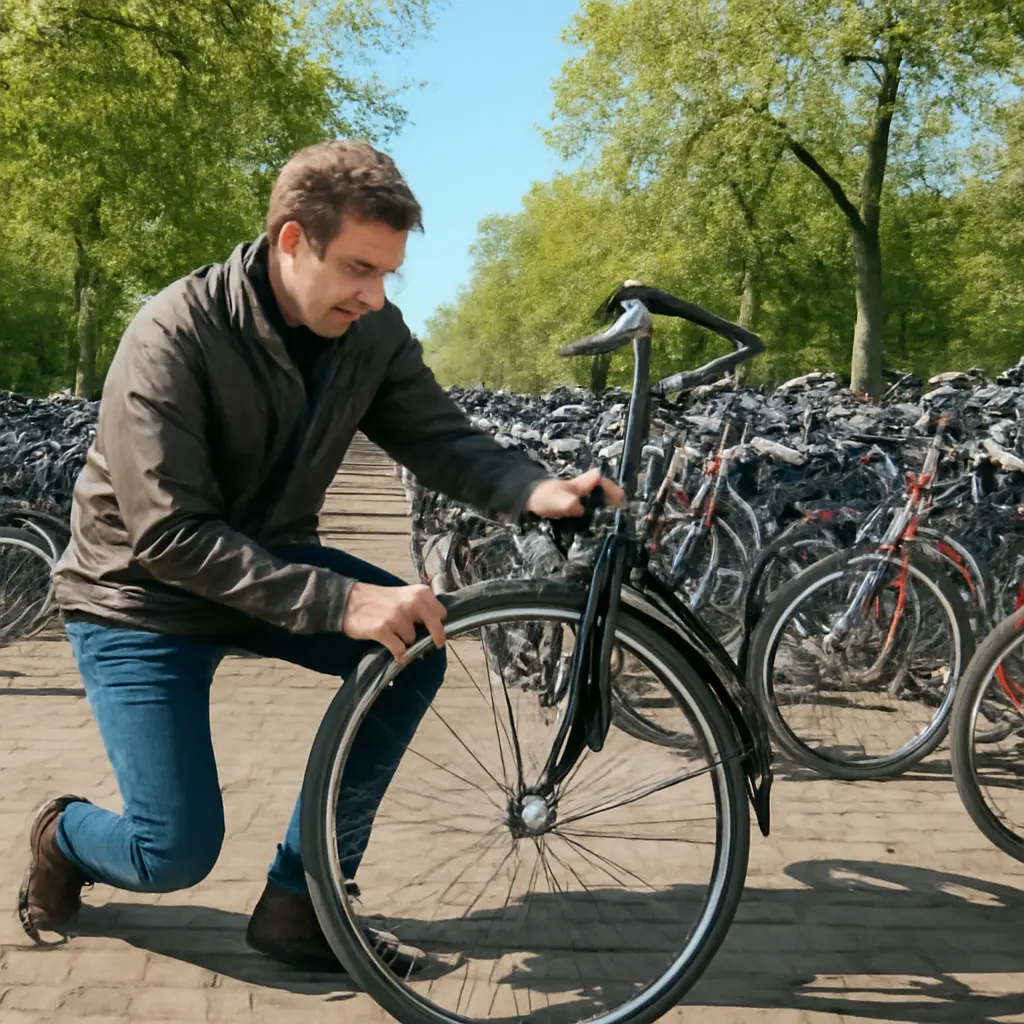
A secondhand bike can be a smart way to save money and keep a usable bicycle in circulation—but a low asking price does not guarantee a good deal. The seven common mistakes are skipping a proper fit, trusting a quick visual check, overlooking wear and repair costs, buying the wrong type of bike, ignoring frame size or damage, failing to verify ownership, and rushing the test ride or payment. The stakes are practical: the Bicycle Product Suppliers Association has reported that U.S. bicycle sales surged during the pandemic-era cycling boom, and used bikes remain part of a large, varied market where condition and fit matter as much as price. A careful inspection and a little research can help buyers avoid turning a bargain into an expensive repair project.
Secondhand bike buying: seven mistakes to avoid
A used bicycle is a previously owned bike sold directly by its owner or through a shop, charity, or resale platform. Unlike a new bike, its history, maintenance, and remaining component life may be uncertain. That makes an informed purchase less about finding the lowest price and more about judging fit, condition, intended use, and total cost.
The market offers many categories—road, mountain, hybrid, commuter, cargo, folding, and electric bikes—so the right choice depends on where and how the rider plans to use it. PeopleForBikes has documented the broad scale of U.S. cycling participation, while the U.S. Consumer Product Safety Commission’s bicycle safety guidance underscores that a bicycle must be in safe working order. The mistakes below apply across categories, though the checks vary by design and components.
1. Choosing a bike before checking the fit
Fit is the relationship between a bicycle’s frame dimensions and a rider’s body and riding position. A bike that is too large or too small can be uncomfortable and harder to control, even if it is mechanically sound. Frame labels such as “medium” are not consistent across brands or models, so use the manufacturer’s size chart as a starting point and assess the actual bike.
Check that the rider can stand over the frame appropriately for that bike’s design and can reach the handlebars and brake levers without strain. A test ride should feel controlled, with no need to overextend to steer or brake. A professional shop can help assess fit, particularly for road bikes, where small changes in reach and saddle position can affect comfort over longer rides.
2. Trusting appearance instead of inspecting the bike
A clean frame and fresh tires do not prove that a bike is in good condition. Inspect the frame and fork for cracks, dents, deep corrosion, or signs of a repair; examine the wheels for wobble and damaged spokes; and check that the brakes engage firmly. Look for a chain that is rusty, stiff, or visibly worn, and shift through the gears to check that the drivetrain operates smoothly.
Pay particular attention to areas under stress, such as welds, the head tube, bottom bracket, and fork. A serious crack or bent structural part is a reason to walk away, not a cosmetic flaw to negotiate over. The U.S. Consumer Product Safety Commission recommends maintaining bicycles and checking key components, including brakes and tires; its safety advice is a useful baseline when evaluating a used bike.
3. Ignoring wear and the true cost of repairs
The purchase price is only one part of the cost. A worn chain can accelerate wear on the cassette and chainrings; neglected brake pads, cables, tires, or wheel bearings may also need replacement. A bike priced below market value may cease to be a bargain once labor and parts are included.
Ask a local bike shop for an estimate if the condition is uncertain, and compare the combined purchase and repair cost with the price of a similar bike in ready-to-ride condition. The Park Tool Company’s repair guidance explains how routine checks and component wear affect maintenance needs. For electric bikes, include battery condition and replacement availability in the calculation; a battery is a major component, and its age, range, and compatibility can materially change the bike’s value.
4. Buying the wrong type of bike for the intended use
Bike type describes a design intended for a particular riding environment. A road bike prioritizes efficient pavement riding; a mountain bike is built for rougher trails; a hybrid or commuter bike often suits mixed surfaces and everyday trips. A cargo bike is designed to carry loads, while a folding bike prioritizes compact storage and portability.
Choose based on the surfaces, distance, hills, storage needs, and cargo you expect—not simply on appearance or a seller’s claim that a bike is “good for everything.” A heavy mountain bike may feel slow on a daily paved commute, while a road bike with narrow tires may be a poor match for broken paths. PeopleForBikes’ participation research illustrates the range of ways people ride; matching the bicycle to the actual trip is more useful than assuming one category fits every rider.
5. Overlooking frame damage or assuming a size label is enough
The frame is the bike’s structural foundation, and damage can affect safety as well as value. Inspect it in good light, including beneath the down tube, around the seat post, and near welds and joints. On carbon-fiber frames, look for cracks, crushed areas, or unusual surface damage; on steel or aluminum frames, check for dents, corrosion, and deformation. If the material or damage is difficult to assess, seek a qualified mechanic’s opinion.
Do not assume a frame size printed on a sticker guarantees a comfortable fit. Brands use different geometry, and older bikes may follow sizing conventions that differ from current models. Compare the bike’s measurements and geometry with the manufacturer’s guidance, then confirm the fit with a short ride. Damage to a fork or frame should be treated cautiously because these parts carry substantial loads.
6. Failing to verify ownership and the bike’s identity
A responsible buyer should establish that the seller has the right to sell the bicycle. Ask for a receipt or other proof of purchase where available, and record the seller’s contact information and the transaction details. Find the bicycle’s serial number, commonly stamped beneath the bottom bracket, and check it against a reputable bike registry or local stolen-property database where those services are available.
A missing serial number, altered markings, an implausibly low price, or a seller unwilling to answer basic questions are warning signs. Bike Index, a nonprofit bicycle registry, encourages owners to register bikes and provides a public search function; registry coverage is not complete, so a clear search is not proof of ownership. If something seems suspicious, do not proceed, and follow local guidance for reporting suspected theft.
7. Skipping the test ride or paying before the checks
A test ride is a practical check of fit and function, not merely a chance to see whether the bike feels fast. In a safe, permitted area, test the brakes, shift through the gears, listen for unusual noises, and check whether the bike tracks straight. If the seller will not allow a reasonable inspection or test ride, ask why and consider leaving.
Agree on the price only after discussing any repair needs. Use a payment method that creates an appropriate record, meet in a public place when buying privately, and keep a receipt that includes the date, price, bike description, and serial number. For an electric bike, test the motor, controls, charger, and battery under normal operating conditions, and confirm that the charger is compatible and the battery is not visibly damaged.
A practical secondhand bike checklist
Before completing a purchase, use this short checklist to connect the bike’s intended use with its condition and ownership history:
- Confirm the bike type suits the routes, terrain, storage, and carrying needs.
- Check fit and ride position; do not rely on the size label alone.
- Inspect frame, fork, wheels, tires, brakes, chain, and gears.
- Estimate likely repairs and compare the total cost with alternatives.
- Record and search the serial number; ask for proof of purchase if available.
- Take a test ride and verify that the bike handles and shifts properly.
- For an electric bike, check battery condition, charger, motor function, and replacement support.
A simple comparison table can help buyers weigh options. List each candidate’s asking price, estimated repair cost, fit, intended use, and ownership documentation; the lowest asking price is not necessarily the best overall value.
Conclusion: buy for condition, fit, and purpose
The most avoidable secondhand-bike regrets come from treating price as the only measure of value. Check fit before committing, inspect safety-critical parts, account for wear and repair costs, choose a bike suited to the trips you will actually make, verify the frame and seller’s documentation, and insist on a careful test ride. These steps protect both your budget and your safety while helping keep usable bicycles in circulation. Before buying, consult the manufacturer’s sizing information, ask a reputable local bike shop about uncertain repairs, and use a bike registry or local resources to check the serial number.
Sources: Bicycle Product Suppliers Association, Bicycle Market Data and Industry Reports, https://www.bpsa.org/; PeopleForBikes, U.S. Bicycling Participation Research, https://peopleforbikes.org/statistics/; U.S. Consumer Product Safety Commission, Bicycle Safety, https://www.cpsc.gov/Safety-Education/Safety-Education-Centers/Bicycles; Park Tool Company, Repair Help, https://www.parktool.com/en-us/blog/repair-help; Bike Index, Bike Registry and Serial Number Search, https://bikeindex.org/